
AUTOMATIC SPRINKLER SYSTEM INSTALLATION IN PORTLAND, OREGON
Serving Portland Since 1987 | 285+ Five-Star Reviews Get Your Free Sprinkler System Quote!Why Portland Lawns Need Automatic Irrigation
Portland’s weather creates a watering problem that surprises most homeowners. From October through May, the rain handles everything. But once summer arrives, typically late June, the rain stops almost completely. Portland averages less than 3 inches of total rainfall across July, August, and September combined. Lawns, planting beds, and new landscaping that thrived all spring start browning within weeks without supplemental watering.
Hand watering doesn’t solve it. It’s inconsistent, time-consuming, and almost always results in some areas getting too much water while others get too little. An automatic sprinkler system delivers the right amount of water to every zone on a schedule, adjusting for the different needs of turf, shrubs, flower beds, and trees. Properties in Lake Oswego and West Linn with larger lots and mixed landscaping benefit especially, since a single irrigation system can manage dozens of zones that would be impossible to water evenly by hand.
The Portland Water Bureau requires a backflow prevention assembly on all residential irrigation systems to protect the public water supply. That’s a code requirement we handle as part of every installation, including the annual testing that the Water Bureau mandates.
Monaghan’s Landscaping has been designing and installing automatic sprinkler systems throughout Multnomah, Clackamas, and Washington Counties since 1987. Every system is custom-designed for the property’s layout, soil type, sun exposure, and plant material, because a system that waters a shaded fescue lawn the same way it waters a sunny perennial bed will overwater one and underwater the other.
If you’re considering an irrigation system, call (503) 847-9110 to schedule a free consultation, or request a free quote online.
What Your Neighbors Are Saying
Our Sprinkler System Installation Process
Every sprinkler system installation follows a structured process designed to get the system right the first time. Here's what to expect when you work with Monaghan's.
Contact Us for a Free Quote
Call (503) 847-9110 or fill out our short quote request form. We'll schedule a convenient time to visit your property and assess the project.
On-Site Consultation and System Design
We walk the property to measure the lawn and planting areas, check water pressure and flow rate at the meter, assess sun and shade exposure, evaluate soil type, and identify obstacles like trees, walkways, and utilities. This is where we design the zone layout, head placement, and controller programming specific to your property.
Written Estimate
You'll receive a detailed, written estimate covering the controller, valve manifold, sprinkler heads, piping, backflow prevention assembly, trenching, lawn repair, and labor. The estimate specifies component brands, zone count, and head types so you know exactly what's being installed.
Backflow Prevention and Permits
The Portland Water Bureau requires a backflow prevention assembly on all residential irrigation systems. We install a code-compliant backflow device, handle any required permits, and schedule the initial testing. This protects the public water supply and keeps your system in compliance from day one.
Trenching and Pipe Installation
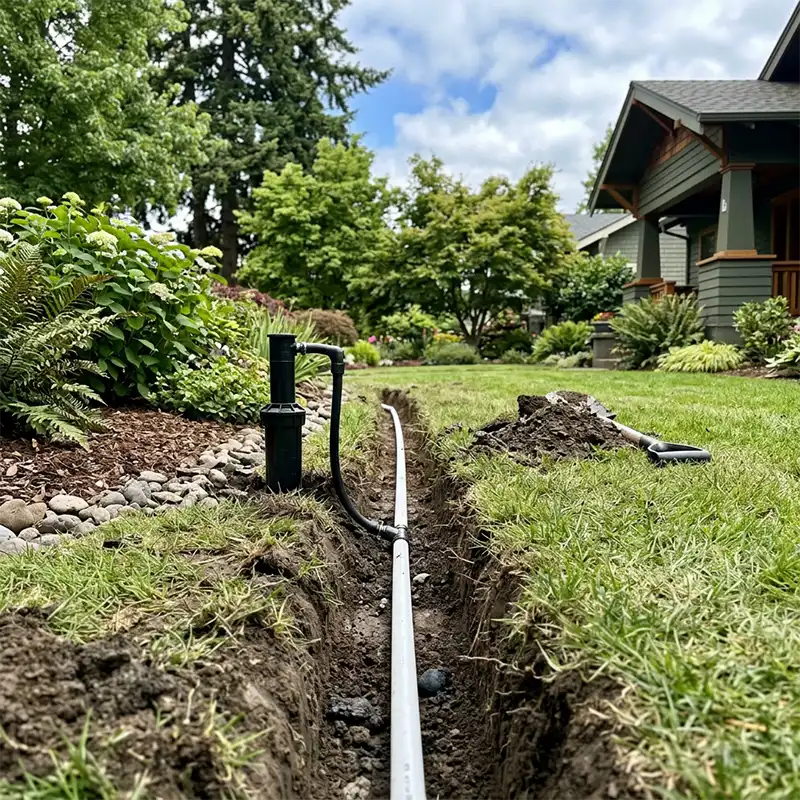
We trench the mainline and lateral lines using professional equipment, routing pipes to each zone according to the design plan. On Portland's clay soil, we set trenching depth to protect lines from freeze damage and compaction. We work around existing landscaping, hardscape, and tree roots to minimize disruption to your yard.
Head Installation, Valve Setup, and Controller Programming
We install sprinkler heads at the designed spacing and angle for head-to-head coverage, connect valves to the manifold, and program the controller with zone-specific run times based on plant type, sun exposure, and soil absorption rate. Each zone is pressure-tested before backfilling.
System Testing and Walkthrough
We run every zone, verify coverage across the entire property, adjust heads for direction and arc, and check for leaks. Then we walk you through the controller operation, explain the seasonal programming, and provide written instructions. Trenches are backfilled, sod is replaced or seed is applied, and we leave the yard clean. We won't leave until we've earned your 5-star review.
Ready to get started? Call (503) 847-9110 or request your free quote today.
Irrigation System Types and Components
A well-designed sprinkler system uses different head types, zone configurations, and delivery methods to match the specific watering needs of each area on your property. Here’s an overview of the system types and components we install.
🌱 Pop-Up Spray Heads
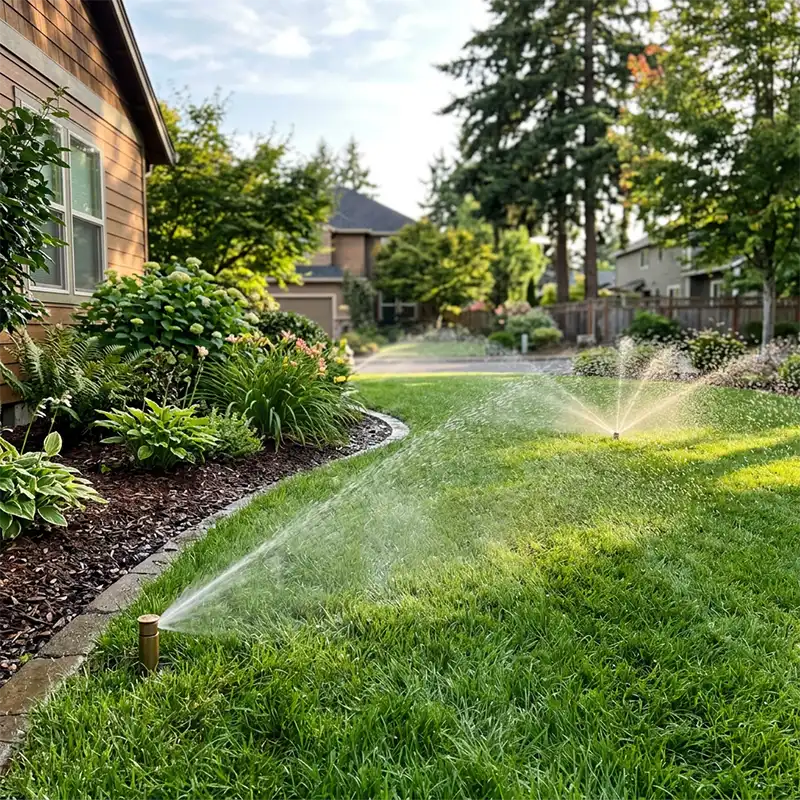
Pop-up spray heads are the standard for residential lawns in the Portland metro. They retract flush with the ground when not in use and pop up to spray a fixed fan pattern when the zone activates. Spray heads are best for small to medium lawn areas where coverage distances are under 15 feet. We space them for head-to-head coverage, meaning each head’s spray reaches the next head, which eliminates dry spots and ensures even watering across the entire zone.
💧 Rotor Heads
Rotors deliver water in a rotating stream that covers larger distances, typically 15 to 50 feet depending on the nozzle. They apply water at a slower rate than spray heads, which reduces runoff on Portland’s clay soil and slopes. Rotors are the right choice for bigger lawn areas, side yards with long runs, and properties in cities like Happy Valley and Damascus where lot sizes tend to be larger. We use matched precipitation nozzles so all heads in a zone apply water at the same rate regardless of their arc setting.
🌿 Drip Irrigation
Drip irrigation delivers water directly to the root zone of individual plants through low-flow emitters or drip tubing. It’s the most water-efficient delivery method and is ideal for planting beds, shrub borders, tree rings, garden areas, and hanging baskets. Drip zones run on separate schedules from spray or rotor zones because the flow rates are completely different. In Portland’s clay soil, drip irrigation also reduces the surface runoff that happens when spray heads apply water faster than the soil can absorb it.
📱 Smart Controllers and Wi-Fi Systems
Smart irrigation controllers adjust watering schedules automatically based on local weather data, soil moisture readings, or evapotranspiration rates. In Portland, where rainfall can vary dramatically week to week during spring and fall, a smart controller prevents the system from running during or after rain and increases watering during dry stretches. Wi-Fi enabled controllers let you monitor and adjust the system from your phone. The Portland Water Bureau offers rebates for WaterSense-labeled irrigation controllers, which can offset part of the upgrade cost.
🔧 Backflow Prevention
Every residential irrigation system in Portland requires a backflow prevention assembly to protect the public water supply from contamination. The most common types for residential systems are the double check valve assembly (DCVA) and the pressure vacuum breaker assembly (PVBA). We install the appropriate device based on your property’s configuration, handle any required permits, and coordinate the initial testing that the Portland Water Bureau mandates. Annual testing is required to stay in compliance.
❄️ Winterization and Seasonal Services
Portland’s occasional freezing temperatures can damage irrigation lines, valves, and backflow assemblies if water isn’t properly removed before winter. We offer fall winterization (compressed air blowout, valve isolation, backflow protection) and spring startup (pressure testing, head cleaning, controller reprogramming) as seasonal services. Homeowners in Beaverton, Tigard, and the West Hills, where winter lows tend to be slightly colder than inner Portland, should schedule winterization by mid-November.
✅ Choosing the Right System for Your Property
Most residential systems in Portland use a combination of spray heads for lawns, rotors for larger turf areas, and drip for beds and trees, all controlled by a single smart controller with zone-specific programming. You don’t need to figure out the design before contacting us. During the on-site consultation, we measure water pressure, assess the property, and design the system layout with the right components for each area.
Sprinkler Systems in Portland: What You Need to Know
Portland’s climate and soil create specific conditions that affect how an irrigation system needs to be designed, installed, and maintained. Understanding these factors helps you get the most out of your investment.
🌧️ Portland’s 2-Season Watering Reality
Portland doesn’t have a gradual shift between wet and dry. It has two distinct seasons. From October through May, rainfall handles nearly all of your landscape’s water needs and your sprinkler system should be off or running at minimal levels. Then from late June through September, rain essentially stops. Portland averages less than 3 inches of total rainfall across those three summer months. That’s when your irrigation system earns its value, delivering consistent, zone-specific watering through the driest stretch of the year. A smart controller with weather-based adjustments handles this seasonal swing automatically, ramping up in July and scaling back as fall rain returns.
🏗️ Clay Soil and Absorption Rates
Most properties across the Portland metro sit on clay-heavy soil that absorbs water slowly. If a sprinkler zone applies water faster than the clay can take it in, the excess runs off the surface into driveways, walkways, and storm drains instead of reaching the root zone. We design systems to match precipitation rates to Portland’s soil absorption capacity. This often means using rotors instead of spray heads on larger zones (rotors apply water at a slower rate), programming shorter run times with soak-in pauses between cycles, and specifying pressure regulation to prevent misting and overspray.
❄️ Winterization and Freeze Protection
Portland’s winters are mild compared to the Midwest, but temperatures regularly dip below freezing in December and January, and cold snaps into the teens are not uncommon in areas like Beaverton, Tigard, and the higher elevations of the West Hills. Water left in irrigation lines, valves, and backflow assemblies during a freeze can crack pipes and destroy components. We recommend winterization (compressed air blowout and backflow isolation) by mid-November, and spring startup (pressure testing, head cleaning, controller reprogramming) in late March or early April once the freeze risk has passed.
💧 Water Conservation and Portland Water Bureau Rebates
An efficient irrigation system actually reduces water use compared to hand watering because it delivers measured amounts to specific zones on a schedule. Smart controllers take this further by skipping irrigation cycles when rain is detected or forecast. The Portland Water Bureau offers rebates for WaterSense-labeled irrigation controllers and multistream rotator nozzles, which can offset part of the cost of upgrading to more efficient components. We can help you identify which rebate-eligible products fit your system during the consultation.
📋 Backflow Testing and Compliance
The Portland Water Bureau requires annual testing of all residential backflow prevention assemblies. Testing must be performed by a state-certified contractor, and results must be submitted to the Water Bureau each year. If testing lapses, the Water Bureau can apply charges to your water account or discontinue service. We can handle annual backflow testing as part of a maintenance plan or as a standalone service, and we submit the required documentation directly to the Water Bureau on your behalf.
Sprinkler System Cost in Portland, Oregon
Automatic sprinkler system installation in the Portland metro area typically costs between $3,500 and $12,000+, depending on the number of zones, property size, water pressure, soil conditions, controller type, and whether the system includes drip irrigation for beds and trees.
| System Size | Common Applications | Typical Range |
|---|---|---|
| Small System | 2-4 zones, small lawns, basic controller, backflow device | $3,500 - $5,500 |
| Medium System | 5-8 zones, full yard coverage, drip for beds, smart controller | $5,500 - $8,500 |
| Large System | 9+ zones, large properties, multiple drip zones, Wi-Fi controller, complex routing | $8,500 - $12,000+ |
The biggest cost variables for Portland properties are zone count and site access. Each zone requires its own valve, piping run, and set of heads, so a 9-zone system involves substantially more material and labor than a 3-zone system. Properties in older neighborhoods like Sellwood, Eastmoreland, and Laurelhurst often have tighter backyard access and mature root systems that require more careful trenching. Newer developments in Happy Valley and Damascus tend to have simpler routing but may need more zones to cover larger lots.
Smart controllers and Wi-Fi systems add $200 to $500+ to the base cost but typically pay for themselves within a season or two through reduced water use. The Portland Water Bureau’s rebate for WaterSense-labeled controllers can offset a portion of that upgrade.
Every estimate includes the backflow prevention assembly, required testing, controller, all heads and valves, trenching, pipe, lawn repair, and labor. There are no hidden fees. If permit costs apply, they’re itemized in the estimate.
Pricing ranges last verified: .
Every Property Is Different
Zone count, head types, controller features, and water pressure all vary from property to property. Let us design a system tailored to your yard's specific layout and watering needs.
"They installed sod and refreshed our sprinkler system, both in the front and back yards. Both turned out great. This is the second project Monaghan's has done for us, and both times the job has turned out even better than expected."

Jordan F.
Tigard, Oregon
Frequently Asked Questions
Quick Reference
Monaghan's Landscaping LLC
7925 SW Canyon Ln, Portland, Oregon 97225
Monday through Saturday, 7:00 AM to 6:00 PM
Fully licensed, bonded, and insured
A+
All of Multnomah, Clackamas, and Washington Counties
1987
How much does sprinkler system installation cost in Portland?
Automatic sprinkler system installation in the Portland metro typically ranges from $3,500 to $12,000+ as of 2026. A small system with 2 to 4 zones for a compact yard runs $3,500 to $5,500. A medium system with 5 to 8 zones covering a full yard with drip irrigation for beds runs $5,500 to $8,500. Large properties needing 9+ zones, complex routing, or Wi-Fi controllers typically run $8,500 to $12,000 or more. The biggest cost variables are zone count, property size, water pressure, soil conditions, and site access. We provide line-item pricing in every written estimate after the on-site assessment.
How long does sprinkler system installation take?
Most residential sprinkler installations in the Portland metro take 1 to 3 days from trenching through final programming. A small 2-to-4-zone system on a straightforward lot can be done in a single day. A full-yard installation with 6+ zones, drip irrigation, and complex routing typically takes 2 to 3 days. Larger properties or projects that involve working around existing hardscape, mature trees, or challenging access may take up to 5 days. We provide a detailed timeline in the estimate.
Does Monaghan's provide free estimates for sprinkler installation?
Yes. We provide free on-site consultations and written estimates for all sprinkler system projects throughout Multnomah, Clackamas, and Washington Counties. During the visit we measure the property, check water pressure and flow rate, assess sun and shade exposure, and design the zone layout. The estimate covers the controller, valves, heads, piping, backflow device, trenching, lawn repair, and labor with line-item pricing. Call (503) 847-9110 or request your free quote online to schedule.
What types of sprinkler heads does Monaghan's install?
We install three main types: pop-up spray heads for small to medium lawn areas (coverage up to 15 feet), rotor heads for larger turf areas (coverage 15 to 50 feet), and drip irrigation emitters for planting beds, shrub borders, and trees. Most residential systems in Portland use a combination of all three, each on separate zones with independent run times. We select head types based on the area's size, shape, water pressure, and soil absorption rate.
What's the difference between rotor and spray heads?
Spray heads deliver water in a fixed fan pattern over shorter distances (up to about 15 feet). Rotors deliver water in a rotating stream over longer distances (15 to 50 feet). The key difference for Portland properties is precipitation rate: sprays apply water faster, which can cause runoff on clay soil before the ground absorbs it. Rotors apply water at a slower rate, giving clay soil more time to absorb each pass. We use matched precipitation nozzles so all heads in a zone apply water at the same rate, regardless of their arc setting. The choice between the two depends on the area's size and your soil's absorption capacity.
Does Monaghan's install drip irrigation for garden beds and trees?
Yes. Drip irrigation delivers water directly to the root zone through low-flow emitters or drip tubing. It's the most water-efficient delivery method and is ideal for planting beds, shrub borders, tree rings, perennial gardens, and container plantings. Drip zones run on separate schedules from spray or rotor zones because the flow rates are completely different. In Portland's clay soil, drip also reduces the surface runoff that occurs when spray heads apply water faster than the ground can absorb it. We design drip systems with pressure regulation and filtration to prevent emitter clogging.
Does Monaghan's install smart controllers and Wi-Fi sprinkler systems?
Yes. Smart controllers adjust watering schedules automatically based on local weather data, soil moisture readings, or evapotranspiration rates. In Portland, where rainfall can swing from weeks of steady rain to weeks of dry heat, a smart controller prevents the system from running during or after rain and increases watering during dry stretches. Wi-Fi enabled models let you monitor and adjust the system from your phone. Smart controllers add $200 to $500 to the base system cost but typically pay for themselves within a season or two through reduced water use. The Portland Water Bureau also offers rebates for WaterSense-labeled controllers.
Can Monaghan's integrate rain sensors or soil moisture sensors?
Yes. Rain sensors pause the system when rainfall is detected, preventing unnecessary watering. Soil moisture sensors monitor the actual moisture level in the ground and only allow irrigation when the soil dries below a set threshold. Both reduce water waste and help comply with Portland's water-efficiency guidelines. We install, calibrate, and test sensors during system commissioning and document the models and maintenance needs in the project paperwork.
Does Portland require a backflow preventer for sprinkler systems?
Yes. The Portland Water Bureau requires a backflow prevention assembly on all residential irrigation systems to protect the public water supply from contamination. The most common types for residential systems are the double check valve assembly (DCVA) and the pressure vacuum breaker assembly (PVBA). We install the appropriate device based on your property's configuration, handle any required permits, and coordinate the initial testing. Annual testing by a state-certified contractor is also required, and results must be submitted to the Water Bureau each year.
Does Monaghan's handle permits for sprinkler installation?
Yes. We handle permit procurement and backflow device requirements as part of the installation process. This includes coordinating with the Portland Water Bureau and local water districts for backflow assembly installation and testing documentation. If your project requires additional permits related to grading or utility work, we identify those during the site evaluation and include the costs in the estimate. You don't need to navigate the permitting process yourself.
How does Portland's clay soil affect sprinkler system design?
Clay soil absorbs water slowly. If a sprinkler zone applies water faster than the clay can take it in, the excess runs off into driveways, walkways, and storm drains instead of reaching root zones. We design systems to match precipitation rates to Portland's clay absorption capacity. This often means using rotors instead of spray heads on larger zones, programming shorter run times with soak-in pauses between cycles, and specifying pressure regulation to prevent misting. For properties with especially dense clay, we may also recommend cycle-and-soak programming, where each zone runs in two or three short bursts with rest periods in between.
How are irrigation zones determined?
Zones are determined by plant type, sun exposure, slope, soil type, and hydraulic calculations. Turf, shrubs, and trees typically get separate zones because they have different water requirements and root depths. A sunny front lawn needs more water than a shaded side yard, so those go on separate zones with different run times. Slopes may need their own zone with shorter run times to prevent runoff. We calculate the number of heads each zone can support based on your water pressure and flow rate, then lay out the zones to provide head-to-head coverage across every area. You'll receive a zone map and programming instructions with the finished system.
When is the best time to install a sprinkler system in Portland?
Late spring through early fall (April through October) provides the best conditions for installation because drier soil is easier to trench and backfill. Ideally, install in spring so the system is operational before summer's dry stretch begins. We install year-round, but winter projects may require additional measures to manage wet soil during trenching. Scheduling your consultation in late winter or early spring helps ensure your project is in the queue when conditions are ideal.
Does Monaghan's offer winterization services?
Yes. Portland's winters are mild but temperatures regularly dip below freezing in December and January, and cold snaps into the teens can occur in areas like Beaverton, Tigard, and the higher elevations of the West Hills. Water left in lines, valves, and backflow assemblies during a freeze can crack pipes and destroy components. We perform compressed air blowouts, valve isolation, and backflow protection as part of our winterization service. We recommend scheduling by mid-November before the first hard freeze.
Does Monaghan's offer spring startup services?
Yes. Spring startup includes pressure testing the system, cleaning and adjusting all heads, checking for leaks or freeze damage, reprogramming the controller for the watering season, and testing the backflow assembly. We recommend scheduling startup in late March or early April once the freeze risk has passed and before Portland's dry season begins. Startup can be scheduled as a standalone service or included in an annual maintenance plan.
Can Monaghan's convert a manual sprinkler system to automatic?
Yes. We frequently convert manual systems to automatic across the Portland metro. We assess the existing piping, valves, and head layout, then replace or retrofit the controller, install automatic valves and a backflow device, and reconfigure zones for efficiency. In many cases the existing pipe can be reused if it's in good condition, which reduces cost. We pressure-test everything, program the new controller, and demonstrate the system before leaving. The estimate details which components can be reused and which need replacing.
Can Monaghan's retrofit an older system to be more water-efficient?
Yes. Common efficiency upgrades include replacing old fixed-spray nozzles with matched-precipitation rotator nozzles, converting planting bed zones from spray to drip, adding pressure regulation to reduce misting and overspray, and upgrading to a smart controller with weather-based adjustments. These changes can reduce water use by 20% to 40% depending on the existing system's condition. The Portland Water Bureau offers rebates for WaterSense-labeled controllers and multistream rotator nozzles, which can offset part of the upgrade cost.
What should I expect during sprinkler installation?
The process follows a clear sequence: we mark the head and trench locations according to the approved design, trench the mainline and lateral lines, install the valve manifold and backflow device, set all heads at the designed spacing, connect piping, pressure-test every zone, program the controller, run each zone to verify coverage and adjust heads, backfill trenches, replace sod or apply seed to disturbed areas, and walk you through the finished system. We clean up daily and minimize disruption to the rest of your yard throughout the process.
How does Monaghan's handle trenching and lawn repair?
We trench using professional equipment that cuts a narrow, clean line through the lawn. After piping is installed and tested, we compact the backfill, replace sod strips or apply grass seed to the trench lines, and match the existing turf as closely as possible. In most cases, trench lines are barely visible within a few weeks as the grass fills back in. The estimate includes trenching, backfill, and lawn restoration so there are no surprise costs. We also take pre-installation photos to document existing conditions.
Can Monaghan's work around utilities, tree roots, and tight access?
Yes. We call in utility locates before every project, use safe trenching practices around marked lines, and hand-dig when necessary near tree roots, existing hardscape, or shallow utilities. Properties in older Portland neighborhoods like Sellwood, Laurelhurst, and Irvington often have tighter access, mature root systems, and more complex routing requirements. We plan delivery staging and pipe routes before work begins to minimize disruption. If irrigation needs to be routed around an existing patio, walkway, or retaining wall, we design the system to accommodate it.
What warranty does Monaghan's offer on sprinkler installations?
We provide a 3-year workmanship warranty covering the installation itself, including trenching, piping, valve connections, head placement, and controller programming. The individual components (controller, valves, heads, piping) carry separate manufacturer warranties that vary by brand, typically 3 to 10 years depending on the part. Both warranties are documented in the written estimate with specific terms, coverage details, and any maintenance requirements that must be followed to keep the warranties valid.
How long do sprinkler system components last?
With proper installation and routine maintenance, moving parts like valves, rotors, and spray heads typically last 5 to 15 years. Controllers last 10 to 15 years before technology upgrades make replacement worthwhile. PVC and poly piping can last 20 to 25+ years depending on soil conditions and installation depth. The components most likely to need replacement first are heads (damaged by mowers or foot traffic) and valve diaphragms (which wear with use). Regular maintenance catches these issues early before they affect system performance.
Does Monaghan's offer maintenance plans for sprinkler systems?
Yes. Maintenance plans typically include spring startup, fall winterization, a mid-season inspection, head adjustments, nozzle cleaning, zone audits, controller reprogramming, and minor repairs. We also check backflow assembly function and schedule annual testing to keep you in compliance with the Portland Water Bureau. Plans are priced based on system size and service level, and customers on maintenance plans get priority scheduling for seasonal services and emergency repairs.
Are emergency repairs available for sprinkler systems?
Yes. We offer troubleshooting and repair for system failures, leaks, broken heads, controller malfunctions, and valve issues. Our crew can diagnose breaks, locate underground leaks, and perform timely repairs to minimize water waste and landscape damage. Maintenance plan customers get priority scheduling. We provide transparent repair estimates before starting work and back repairs with a workmanship guarantee.
How does Monaghan's test and balance a new sprinkler system?
After installation, we run every zone, verify head-to-head coverage, adjust arc and direction on each head, and check for leaks at every connection. We use flow measurements to confirm that each zone is operating within the designed pressure and flow parameters, and we adjust nozzles and pressure regulators as needed to ensure even water distribution. The controller is then programmed with zone-specific run times based on plant type, sun exposure, and soil absorption rate. You receive the final zone map, run time schedule, and written instructions.
How do I prevent sprinkler heads from getting damaged by my mower?
We reduce mower damage by specifying recessed pop-up heads that sit flush with or slightly below grade when retracted, placing heads away from high-traffic mower paths where possible, and using commercial-grade heads with durable casings in vulnerable locations. We document all head locations on the zone map so you (or your lawn care crew) know where they are. If a head does get hit, it's a straightforward repair. We can also install protective head guards in high-risk areas.
Does Monaghan's include controller programming and training?
Yes. Controller programming and homeowner training are included in every installation. We program seasonal schedules for each zone, set up weather-based or sensor-based adjustments if the system includes those features, configure Wi-Fi and app integration for smart controllers, and walk you through the operation in person. You receive printed instructions covering how to adjust run times, add a manual cycle, pause the system, and make seasonal changes. If you need a refresher later, we can schedule a follow-up training visit.
How does Portland's seasonal weather affect sprinkler system design?
Portland's two-season climate (wet October through May, dry June through September) requires a system that can be completely dormant for months and then deliver consistent, efficient watering through the driest stretch of the year. We design around this by specifying smart controllers that adjust automatically as conditions change, incorporating rain or soil moisture sensors to prevent unnecessary watering during transitional spring and fall weeks, and including winterization-ready components that can be fully drained before freeze season. The system needs to handle Portland's summer dry spells, not Portland's winter rain.
How does Monaghan's handle slopes and drainage challenges for irrigation?
Sloped areas need special attention because water runs downhill before the soil can absorb it. We address this by putting slopes on separate zones with shorter run times, using matched-precipitation rotator nozzles that apply water at a slower rate, specifying check valves to prevent low-head drainage (where water drains out of the lowest head after the zone shuts off), and programming cycle-and-soak schedules. Properties in West Linn, Oregon City, and the hillside neighborhoods of Southwest Portland often benefit from these slope-specific design features.
Can Monaghan's install irrigation when new sod or seed is going down?
Yes, and this is actually the ideal time. Installing the irrigation system before the sod goes down means we can trench without disturbing an established lawn, set heads at the correct height relative to the new grade, and have the system operational from day one to support sod establishment or seed germination. We design temporary watering schedules for the establishment period (frequent, short cycles) and then transition to a standard deep-watering schedule once the lawn is rooted. Coordinating both services in a single project saves time and avoids tearing up new turf later.
Can Monaghan's integrate irrigation with patios, retaining walls, or other landscaping?
Yes. When irrigation is designed alongside patios, retaining walls, or new planting, we coordinate pipe routes, valve locations, and head placement to avoid conflicts with hardscape construction. Drip lines for planting beds behind retaining walls are installed before the beds are filled. Pipe sleeves are run under patios and walkways during construction so we don't have to cut through finished hardscape later. Bundling irrigation with a larger landscaping project is more efficient and less expensive than adding it after the fact.
Does Monaghan's install commercial sprinkler systems?
Yes. We handle commercial irrigation installations throughout the Portland metro, including multi-family properties, office parks, HOA common areas, and institutional landscapes. Commercial projects often involve larger zone counts, higher flow rates, separate irrigation meters, phased installation schedules, and coordination with other trades. We provide detailed bids, insurance certificates, and project timelines. For HOAs, we coordinate community communication and schedule work to minimize disruption to residents.
Can Monaghan's design systems that meet HOA rules or local codes?
Yes. We review HOA restrictions on equipment placement, approved brands, and water-use requirements before designing the system. We also ensure installations meet Portland building codes, backflow requirements, setback rules, and water-conservation standards. If your HOA requires design approval before installation, we provide drawings and specifications you can submit to the architectural review committee. The system is designed to comply from the start so there are no costly modifications after the fact.
What brands and materials does Monaghan's use?
We use professional-grade controllers, valves, heads, and piping from established manufacturers with strong warranty support and local parts availability. We select components based on your property's hydraulic requirements, soil conditions, and the specific demands of Portland's climate. The estimate documents exact brand names, model numbers, and warranty terms for every component so you know what's being installed. We don't use builder-grade or big-box retail components on professional installations.
How does Monaghan's minimize disruption to my yard during installation?
We use professional trenching equipment that cuts a narrow, clean line rather than tearing up large sections of lawn. We plan pipe routes to minimize the number of trenches needed, protect existing plants and hardscape with barriers when needed, and clean up daily. Trenches are backfilled and compacted the same day they're dug when possible. Sod is replaced or seed is applied to all disturbed areas. We document pre-existing conditions with photos so you have a record of the yard's state before and after the work.
Does the Portland Water Bureau offer rebates for efficient irrigation equipment?
Yes. The Portland Water Bureau offers rebates for WaterSense-labeled irrigation controllers and multistream rotator nozzles. Residential accounts can receive up to $100 toward a qualifying controller, and commercial accounts up to $500. Your backflow testing must be current to qualify. We can identify which rebate-eligible products fit your system during the consultation and help you apply for the rebate after installation.
What documentation does Monaghan's provide after installation?
After installation you receive an as-built zone map showing head locations and pipe routes, controller program settings for each zone, a component list with brand names, model numbers, and warranty details, backflow test certificates and permit documentation when applicable, written maintenance recommendations including seasonal adjustment guidelines, and our workmanship warranty terms. This documentation package makes it easy to maintain the system yourself, communicate with a future maintenance provider, or demonstrate the system's value if you sell the property.
How do I schedule a sprinkler installation or service call?
Call (503) 847-9110 or request a quote online. We'll schedule a free on-site consultation to assess your property, design the system, and provide a written estimate. Once you approve the estimate, we typically schedule installation within 1 to 3 weeks depending on the season. Spring and summer are the busiest months, so scheduling your consultation early helps secure your preferred timeline.
How soon after approval can Monaghan's start the installation?
We can typically schedule installation within 1 to 3 weeks after estimate approval, depending on the season and any permit processing times. Spring is our busiest season for irrigation work, so lead times may extend to 2 to 4 weeks from March through June. We confirm a start date and provide a written project timeline before collecting any deposit.
What areas does Monaghan's serve for sprinkler system installation?
We serve the entire Portland metro area, including all of Multnomah County, Clackamas County, and Washington County. That covers Portland, Beaverton, Lake Oswego, West Linn, Milwaukie, Gladstone, Clackamas, Happy Valley, Damascus, Oregon City, Tigard, Tualatin, and surrounding communities. If you're not sure whether we serve your area, call (503) 847-9110 and we'll let you know.
Why Portland Homeowners Choose Monaghan’s Landscaping
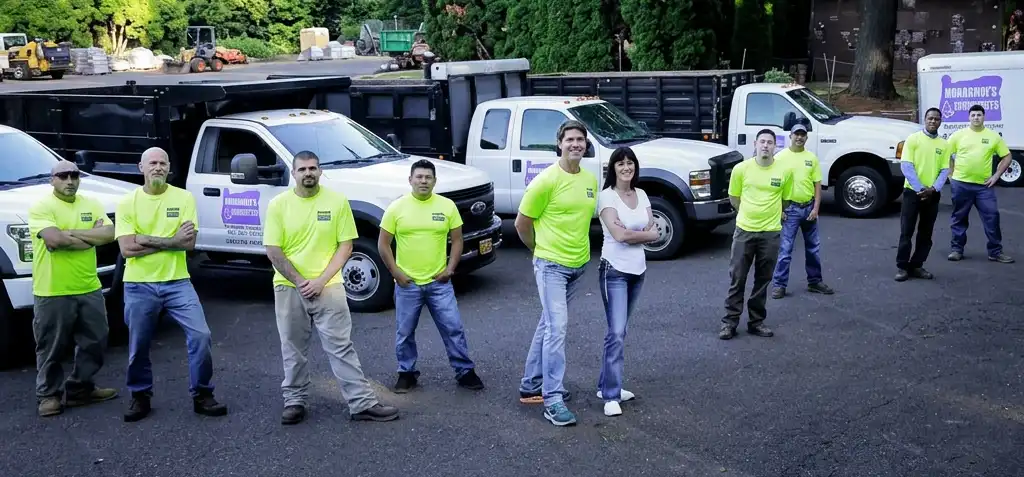
When you’re investing in landscaping projects for your property, you want a contractor who understands Portland-area soil, climate, and terrain. Here’s why homeowners across the metro area trust Monaghan’s.
38+
years in Portland
285+
five-star reviews
A+
BBB rating
3 yr
workmanship warranty
Licensed, bonded, insured — Oregon LCB# 7419 👈 click to verify
Free written estimates — on-site consultation, full scope before work begins
5-star commitment — we won't leave until we've earned your 5-star review, see our live Google reviews
Eco-friendly equipment — electric at 65-70 dB, quieter than conversation, no nasty exhaust fumes
Landscaping Contractor Services In Portland, OR
Retaining Wall Installation
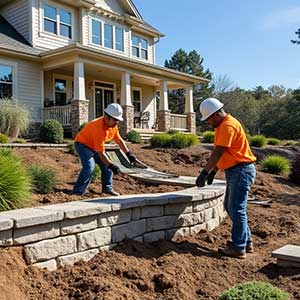
If your property has slopes that affect drainage or water runoff, a retaining wall can solve the grading problem and create level space for landscaping that’s easier to irrigate. We build concrete block, natural stone, and boulder retaining walls designed for Portland’s clay soil and wet climate. When a retaining wall and irrigation system are part of the same project, we route pipe sleeves through or around the wall during construction so the system integrates cleanly.
New Sod Lawn Installation
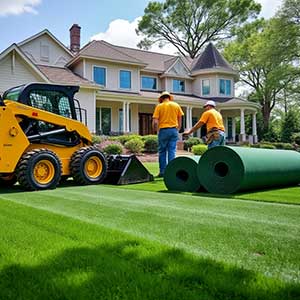
A new sprinkler system and new sod are the ideal combination. Installing irrigation before the sod goes down means we can trench without disturbing an established lawn, set heads at the correct height, and have the system running from day one to support establishment. We install perennial ryegrass and fine fescue blends from local Willamette Valley growers, recommended by OSU Extension for Western Oregon lawns.
Automatic Sprinkler System Installation
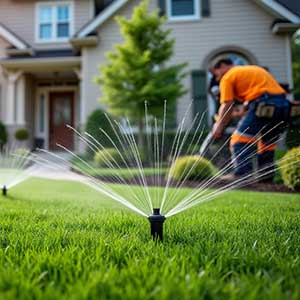
You’re already here! Whether you need a new system for an unirrigated property, a conversion from manual to automatic, or an efficiency retrofit on an aging system, we design every installation around your property’s specific layout, soil type, water pressure, and plant material. From small 2-zone setups to full-property systems with smart controllers and drip irrigation, we handle permitting, backflow compliance, and seasonal programming.

Artificial Turf Installation
If part of your yard can’t sustain natural grass due to heavy shade, dog traffic, or chronic mud, artificial turf eliminates the problem permanently, and it also eliminates the need for irrigation in that area. When you’re converting a section to turf but keeping natural grass elsewhere, we can rezone and reroute your sprinkler system to remove coverage from the turf area and optimize it for the zones that still need water.
Paver Installation
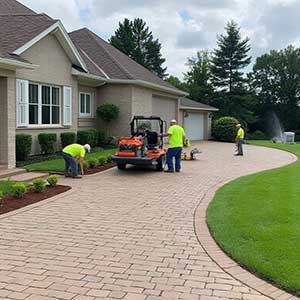
Patios, walkways, and driveways need to be planned alongside irrigation so pipe routes don’t conflict with hardscape construction. We run pipe sleeves under pavers during installation so sprinkler lines can cross without cutting through finished surfaces later. If you’re adding a patio and want to extend or adjust your irrigation at the same time, bundling both services into one project is more efficient and less expensive.
Areas We Serve
Don't See Your Area? Give us a call, we probably serve your area too! Call (503) 847-9110
Monaghan’s Landscaping, As Featured On:


