
DRAINAGE SOLUTIONS IN PORTLAND, OREGON
Serving Portland Since 1987 | 285+ Five-Star Reviews Get Your Free Drainage Quote!Why Portland Properties Need Professional Drainage
Portland receives more than 43 inches of rain annually, and most of it falls between October and May. That volume of water, combined with the clay-heavy soil found across much of the metro area, creates drainage conditions that overwhelm most residential yards without a designed system to manage the flow.
Standing water, soggy lawns, foundation seepage, and hillside erosion are among the most common property complaints in Multnomah, Clackamas, and Washington Counties.
We install French drains, E-Z Flow drains, catch basin systems, grading corrections, drainage swales, dry creek beds, downspout routing, and erosion control solutions. Every project starts with a site assessment to identify where water is coming from, where it’s going, and what’s preventing it from getting there.
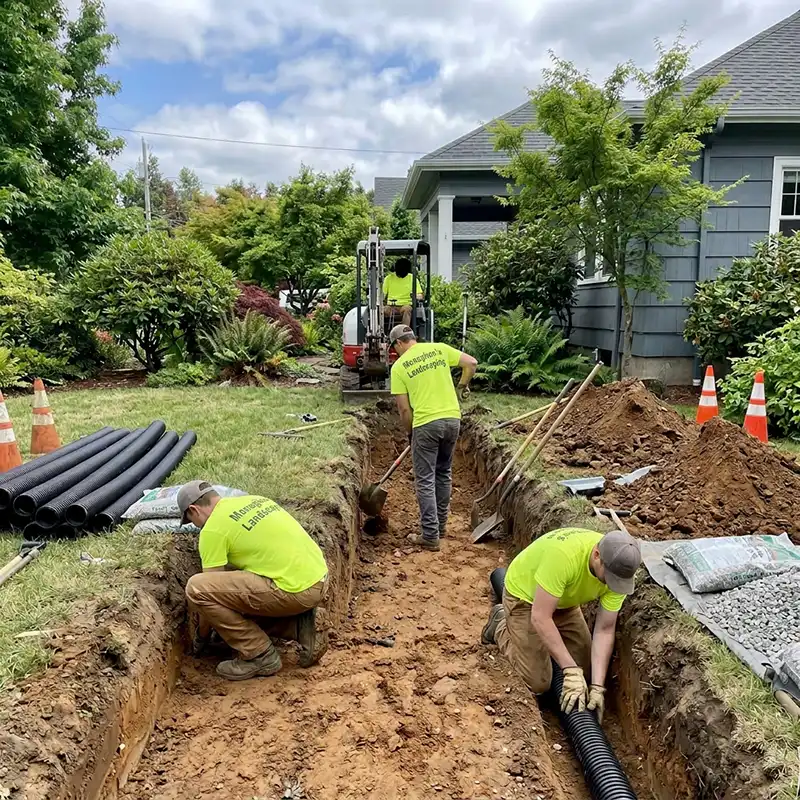
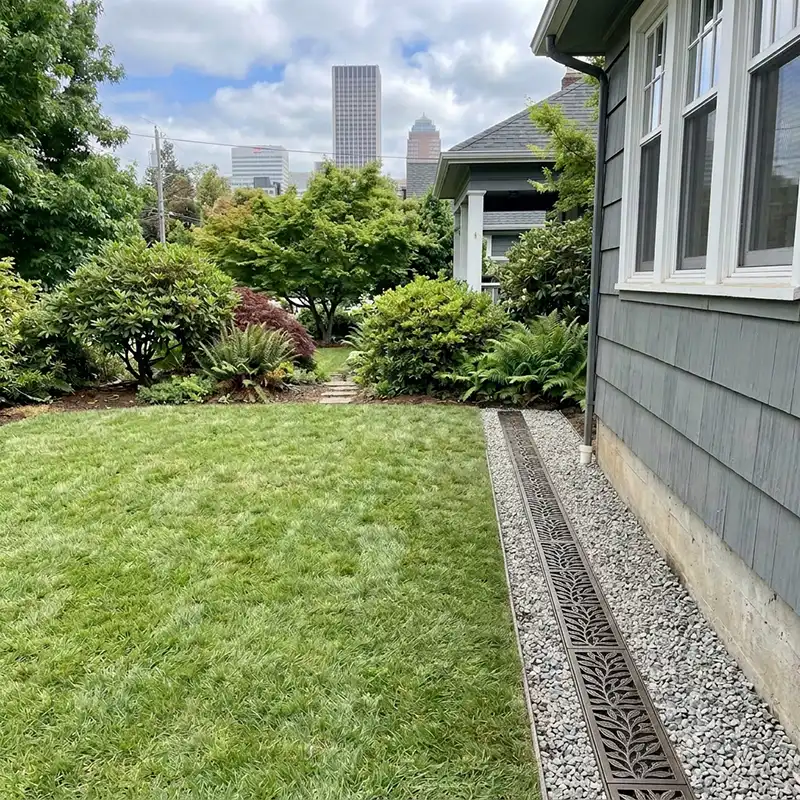
Our solutions are designed specifically for Portland’s soil, slope, and seasonal rainfall patterns.
The Portland Bureau of Environmental Services manages the city’s stormwater infrastructure and sets requirements for how residential properties handle runoff.
Monaghan’s Landscaping has been solving drainage problems on Portland-area properties since 1987.
We design drainage systems that work with Portland’s stormwater regulations, not against them.
Call (503) 847-9110 or request a free estimate to schedule a free on-site drainage consultation.
We’ll walk your property, identify the problem areas, and provide a written proposal with line-item pricing.
See What Your Neighbors Are Saying
Our Drainage Installation Process
Contact Us for a Free Drainage Consultation
Call (503) 847-9110 or submit a quote request. We'll schedule an on-site visit, typically within a few days, to walk your property and assess the drainage conditions firsthand.
On-Site Assessment and Problem Diagnosis
We evaluate how water moves across your property during and after rain. We check slope direction, soil saturation, low spots, foundation grading, downspout discharge points, and any existing drainage systems. If you've noticed specific problem areas, show us during the visit.
Custom Drainage Plan and Written Estimate
Based on the assessment, we design a drainage solution tailored to your property's soil, slope, and water flow patterns. You'll receive a detailed written estimate with line-item pricing, a description of each component (French drain, catch basin, grading, E-Z Flow, etc.), and a project timeline.
Utility Locates and Permit Coordination
Before any digging, we call in utility locates to mark underground gas, water, electric, and cable lines. If your project requires a permit from the Portland Bureau of Development Services, we handle the application and documentation.
Excavation and Base Preparation
We excavate trenches, catch basin pits, and grading areas according to the approved plan. On Portland's clay soil, proper trench depth and slope are critical. We establish the correct grade so gravity moves water away from problem areas and toward the discharge point.
Drainage System Installation
We install the drainage components: perforated pipe bedded in gravel for French drains, E-Z Flow pipe for areas where gravel backfill isn't practical, catch basins with grated inlets at low points, solid discharge pipe to route water to the appropriate outlet, and filter fabric to keep Portland's clay out of the system. Every connection is sealed and every run is pitched to ensure water flows, not sits.
Backfill, Grading, and Surface Restoration
Trenches are backfilled in layers and compacted to prevent settling. We regrade disturbed areas so the surface drains properly and restore lawns, beds, and hardscape edges. If the project includes regrading a larger area, we bring in topsoil and establish the finished grade to direct surface water away from the house and toward the drainage system.
Flow Testing and Final Walkthrough
We run water through the entire system to verify flow, check every catch basin for proper drainage, and confirm that discharge points are functioning. We walk the completed project with you, explain how the system works, and cover any maintenance needs. Your 3-year workmanship warranty starts at completion.
Every drainage problem is different. Let us assess yours and design a solution that works for your property.
Call (503) 847-9110 Get Your Free EstimateDrainage Solutions We Install
French Drains
A French drain is a trench filled with gravel and a perforated pipe that collects subsurface water and redirects it away from problem areas. It’s the most common drainage solution we install on Portland properties because it addresses the root cause of most yard drainage problems: water trapped in clay soil with nowhere to go.
We install French drains along foundations, behind retaining walls, across soggy lawn areas, and at the base of slopes. The perforated pipe is bedded in clean gravel, wrapped in filter fabric to prevent clay infiltration, and pitched to a discharge point where water exits the system. A properly installed French drain can last 30 years or more with minimal maintenance. For a deeper look at how French drains work in Portland’s conditions, see our Drainage and Grading Guide.
E-Z Flow Drains
E-Z Flow is a pipe-and-aggregate system wrapped in a geotextile fabric sleeve that eliminates the need for traditional gravel backfill. The pipe comes pre-surrounded by polystyrene aggregate inside the fabric, so installation is faster and the trench can be narrower.
We use E-Z Flow drains in tight-access areas where hauling and placing bulk gravel isn’t practical, in garden beds where a narrow trench minimizes root disturbance, and in projects where reducing excavation time and material cost is a priority. E-Z Flow performs the same function as a traditional French drain but is lighter, quicker to install, and works well in the confined side yards and narrow lots common in neighborhoods like Sellwood, Hawthorne, Laurelhurst, and the older inner eastside streets where properties sit close together..
Catch Basin Drains and Area Drains
Catch basins are grated inlet boxes installed at ground level in low spots where surface water collects. Water flows through the grate into the basin, then exits through a solid pipe that routes it to a discharge point.
We install catch basins at the base of driveways, alongside patios and walkways, in lawn depressions, and at the bottom of slopes where runoff concentrates.
Catch basins are often combined with French drains in a complete system: the French drain handles subsurface water while the catch basin handles surface runoff. We size and position each basin based on the volume of water it needs to handle and the grading of the surrounding area.
Grading and Regrading
Grading is the shaping of the ground surface to control where water flows. On many Portland properties, the original grading has settled, eroded, or was never correct to begin with. Water that should flow away from the house instead pools against the foundation. Patios drain toward the lawn instead of away from it. Low spots collect water with no outlet. We regrade yards, slopes, and hardscape perimeters to establish positive drainage away from structures and toward appropriate discharge points. Grading corrections are often the first step in a drainage project, and sometimes regrading alone is enough to solve the problem without installing pipe.
Drainage Swales and Dry Creek Beds
A swale is a shallow, sloped channel that directs surface water across a property and toward a discharge point.
A dry creek bed is a swale lined with river rock that doubles as a landscape feature when it’s not carrying water. Both are effective at managing surface runoff on sloped Portland properties where underground pipe isn’t necessary or where the homeowner wants a visible, natural-looking drainage element.
We design swales and dry creek beds to match the volume of water they need to carry, with proper slope, rock sizing, and overflow capacity for heavy Portland rain events.
Downspout and Gutter Drain Routing
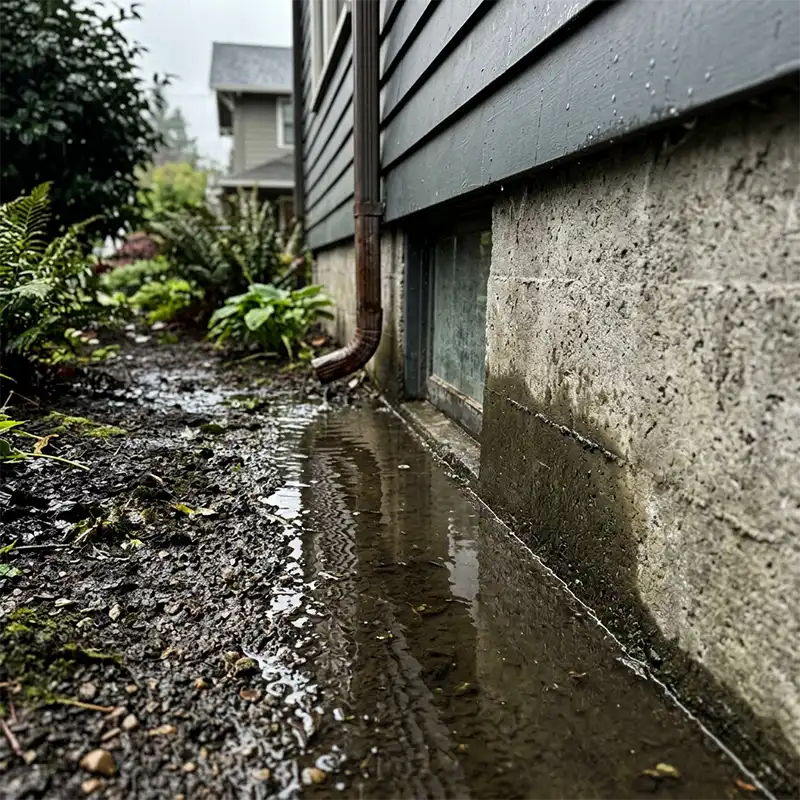
Roof runoff is one of the largest single sources of water on a residential property, and in Portland’s rainy season, a typical roof can shed thousands of gallons per month. If downspouts discharge directly against the foundation or onto a patio, that concentrated water causes exactly the kind of damage drainage systems are designed to prevent.
We route downspouts into solid underground pipe that carries roof water away from the house and discharges it at the street, a dry well, or a designated drainage area. This is one of the simplest and most cost-effective drainage improvements on any Portland property.
Erosion Control
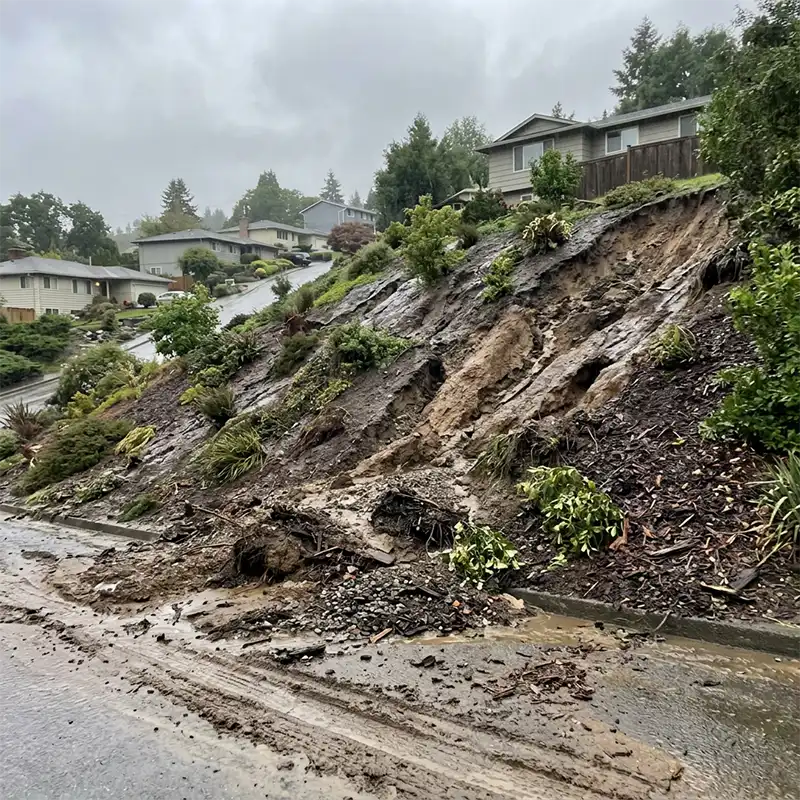
Slopes that lose soil during every rainstorm need more than just drainage pipe. We stabilize eroding hillsides and slopes with a combination of grading corrections, retaining walls, terracing, plantings, and surface drainage to slow water velocity and hold soil in place.
Portland’s clay soil is especially vulnerable to erosion on slopes because saturated clay becomes slippery and unstable. Many of our erosion control projects in West Linn, Lake Oswego, and Happy Valley combine structural solutions with vegetation to create long-term slope stability.
Drainage Challenges Unique to Portland Properties
💧 Clay Soil & Water Retention
Most residential properties across the Portland metro sit on clay-heavy soil. Clay particles are densely packed and absorb water slowly, which means rainfall that would drain through sandy or loamy soil in minutes can sit on or near the surface for days.
During the wet season, clay becomes saturated to the point where it can’t absorb any additional water at all. Every drop that falls after saturation either pools on the surface or runs downhill. This is why drainage systems in Portland need to intercept and redirect water underground rather than relying on the soil to absorb it. French drains, E-Z Flow drains, and catch basins all bypass the clay layer entirely, giving water a clear path out of the yard.
🏔️ Slopes, Hills, & Grading Problems
Portland’s terrain ranges from flat inner eastside lots to steep hillside properties in the West Hills, Lake Oswego, West Linn, Happy Valley, and Damascus. Sloped properties concentrate water at the bottom of the grade, which is often right where the house, patio, or lawn sits.
Homes built on cut-and-fill lots (common in newer developments across Clackamas County) are especially prone to drainage problems because the fill soil compacts and settles unevenly over time, creating low spots that trap water. We design drainage systems that account for the full path water takes across a sloped property, from the top of the grade to the discharge point, intercepting it at the right locations along the way.
🌧️ Seasonal Rainfall Patterns
Portland receives more than 43 inches of rain per year, but the distribution is heavily weighted toward fall and winter. Between October and May, it’s not unusual for properties to receive sustained rain for days or weeks at a time. Summer, by contrast, typically delivers less than 3 inches across July, August, and September combined.
This pattern means drainage systems need to handle extreme volume during the wet months while sitting dormant through the dry season. Systems that work fine in a moderate drizzle can be completely overwhelmed by a multi-day November storm. We size pipe, gravel beds, and catch basins for peak Portland rainfall events, not average conditions.
🌊 Stormwater Regulations & Discharge Requirements
Portland’s Stormwater Management Manual sets requirements for how residential properties handle runoff, especially when development or redevelopment adds impervious surfaces. Drainage systems that discharge into the city’s storm system or connect to public infrastructure may require review by the Bureau of Environmental Services.
Properties near drainageways, wetlands, or environmental overlay zones may face additional restrictions. We design systems that comply with current Portland stormwater regulations and handle permit coordination when required. If your property falls within a drainage reserve or a managed floodplain, we account for those restrictions in the design.
Drainage Solutions Cost in Portland, Oregon
Drainage project costs in Portland vary based on the type of system, the size of the area being addressed, soil conditions, slope, access, and whether the project involves grading, pipe installation, or both. Below are typical ranges for residential drainage projects in the Portland metro area.
| Project Type | Typical Range | Common Applications |
|---|---|---|
| Single French Drain | $1.5k – $4k | Foundation perimeter, soggy lawn area, base of slope |
| E-Z Flow Drain | $1.2k – $3.5k | Side yards, garden beds, tight-access areas |
| Catch Basin System | $800 – $3k | Low spots, driveway edges, patio runoff |
| Downspout Routing | $500 – $2.5k | Underground routing of roof runoff away from foundation |
| Yard Regrading | $1.5k – $6k | Foundation grading, lawn leveling, slope correction |
| Multi-System Install | $4k – $15k | French drain + catch basins + grading + downspout routing |
| Comprehensive System | $10k – $25k+ | Full-property drainage, hillside erosion control, retaining wall integration |
The biggest cost variables on Portland drainage projects are soil conditions (clay requires more excavation and backfill), slope (hillside properties need longer pipe runs and more complex routing), access (tight side yards or fenced properties increase labor time), and whether the project connects to an existing storm system or needs a new discharge point.
Projects that combine drainage with other landscaping work like retaining walls, new sod, or paver installation are often more cost-effective than doing each separately because site work overlaps.
Pricing ranges last verified . All estimates are based on typical Portland metro residential projects. Your actual cost depends on site conditions assessed during the free consultation.
Every Property Drains Differently
Your drainage solution depends on your soil, slope, water volume, and where the problem areas are. A single French drain might solve it, or you might need a combination of grading, catch basins, and pipe routing. We'll assess your property and design a system that actually fixes the problem.
"The project was to remove marshy grass, put in drainage, then install architectural slabs with Mexican pebbles. The final outcome exceeds expectations. Jamie, Colette, Craig and the rest of the team were delightful to work with."

Heather Gordon
Oregon City, Oregon
Frequently Asked Questions
Quick Reference
Monaghan's Landscaping LLC
7925 SW Canyon Ln, Portland, Oregon 97225
Monday through Saturday, 7:00 AM to 6:00 PM
Fully licensed, bonded, and insured
A+
All of Multnomah, Clackamas, and Washington Counties
1987
Q: How much does drainage installation cost in Portland?
Single French drain or catch basin projects typically start at $1,200 to $4,000. Mid-size projects combining grading with a drainage system run $4,000 to $15,000. Comprehensive full-property systems with multiple drain types, hillside erosion control, or retaining wall integration can reach $10,000 to $25,000 or more. The biggest cost variables on Portland properties are clay soil excavation depth, total pipe run length, number of catch basins, and site access.
Q: How much does a French drain cost in Portland?
A single residential French drain in the Portland metro typically costs $1,500 to $4,000 depending on trench length, depth, access, and discharge routing. Longer runs along a full foundation perimeter or across a large yard area fall toward the upper end. French drains combined with catch basins, grading, or downspout routing as part of a larger system are priced as a complete project.
Q: What is a French drain and how does it work?
A French drain is a gravel-filled trench with a perforated pipe at the bottom. Subsurface water seeps through the gravel, enters the pipe through the perforations, and flows by gravity to a discharge point away from the problem area. The trench is lined with filter fabric to prevent clay and silt from clogging the system. French drains work by intercepting water underground before it reaches the surface, which is why they're the most effective solution for Portland's saturated clay soil.
Q: How long does a French drain last?
A properly installed French drain with quality filter fabric and clean gravel can last 30 years or more. The most common reason French drains fail prematurely in Portland is clay infiltration from missing or improperly installed filter fabric. Periodic flushing of the pipe with a garden hose every few years helps maintain flow. If the discharge outlet stays clear and the fabric stays intact, the system should outlast most other components on the property.
Q: Do French drains clog? How do I maintain one?
French drains can clog over time if fine sediment works past the filter fabric or if roots grow into the pipe. Maintenance is minimal: check the discharge outlet seasonally to make sure water flows freely, flush the pipe with a hose every 1 to 2 years, and keep the area above the trench clear of deep-rooted plantings. In Portland, clay sediment is the primary clog risk, which is why we use high-quality filter fabric and clean, washed gravel on every installation.
Q: What is an E-Z Flow drain?
E-Z Flow is a pre-assembled drainage pipe surrounded by polystyrene aggregate and wrapped in geotextile fabric. It eliminates the need for bulk gravel, so the trench can be narrower and installation is faster. It functions the same way as a traditional French drain, intercepting and redirecting subsurface water, but it's lighter and easier to install in tight spaces. We use E-Z Flow on Portland properties where side yards are narrow, access is limited, or minimizing excavation around roots and garden beds is a priority.
Q: When is an E-Z Flow drain better than a French drain?
E-Z Flow is a better fit when the trench runs through tight side yards, along fence lines, through established garden beds, or in areas where hauling bulk gravel isn't practical. Traditional French drains with gravel backfill are the stronger choice for high-volume applications like foundation perimeters, large lawn areas, and behind retaining walls where maximum water-handling capacity matters. We assess which system fits best during the site visit.
Q: What is a catch basin and where is it used?
A catch basin is a grated inlet box installed at ground level that collects surface water and routes it through an underground pipe to a discharge point. We install catch basins at the base of driveways, alongside patios and walkways, in lawn low spots, and at the bottom of slopes where runoff concentrates. Catch basins handle surface water that French drains can't reach, and the two systems are often combined on Portland properties where both surface runoff and subsurface saturation are problems.
Q: How do I know if my yard has a drainage problem?
Common signs include standing water that persists more than 24 hours after rain, areas of lawn that stay soft or spongy when the rest of the yard has dried, water stains or damp spots on the foundation, mulch that washes out of beds, erosion channels on slopes, and downspouts that discharge directly against the house. In Portland, the best time to diagnose drainage problems is during a heavy rain event in November or December when the soil is fully saturated and water has nowhere to hide.
Q: Can poor drainage damage my foundation?
Yes. Water that pools against a foundation can seep into cracks, cause hydrostatic pressure against basement walls, contribute to mold and mildew in crawl spaces, and over time lead to structural settling or shifting. In Portland, where rain falls steadily for months, even a small grading problem that directs water toward the house can cause cumulative damage over several wet seasons. Foundation drainage is one of the most common and most urgent reasons homeowners contact us.
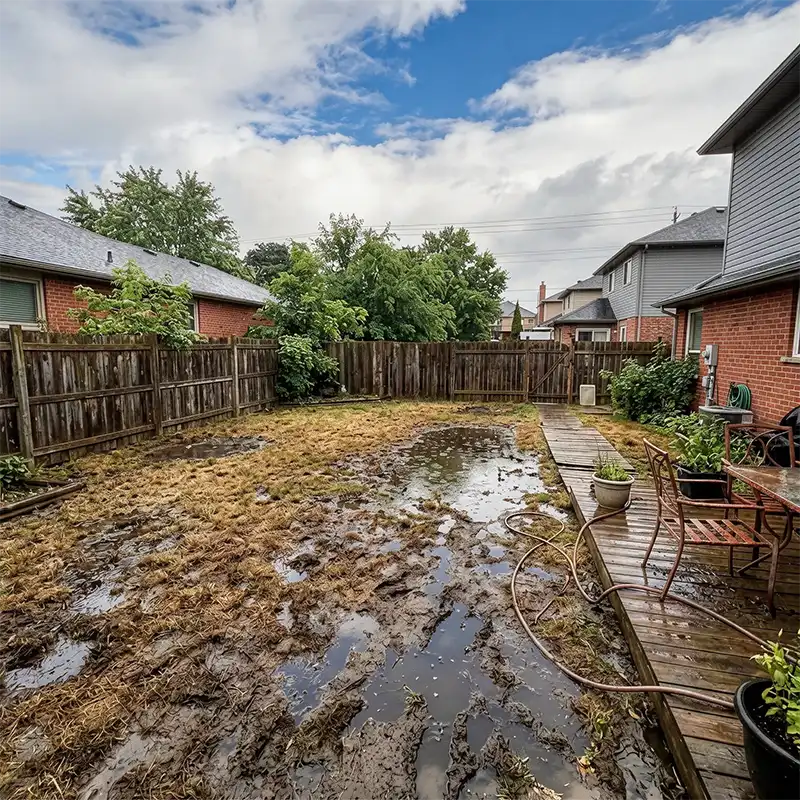
Q: Why is my yard always muddy?
Persistent mud usually means the soil is saturated and can't absorb any more water. In Portland, clay soil is the most common culprit because it holds water instead of letting it drain through. Compaction from foot traffic, vehicles, or construction makes it worse. The fix depends on the cause: grading corrections if water is flowing to the wrong place, French drains or E-Z Flow if the water table is too high, soil amendment if the topsoil layer is too thin, or a combination. Sometimes the solution is replacing the muddy area with artificial turf or a paver surface that handles traffic without turning to mud.
Q: What causes standing water in my yard after rain?
Standing water forms when the ground can't absorb or move water fast enough. The three most common causes in Portland are low spots where grading traps water with no outlet, clay soil that's reached saturation and won't take any more, and impervious surfaces (driveways, patios, roofs) directing concentrated runoff into areas that can't handle the volume. The solution depends on which of these is the primary cause, and it's often more than one. Our site assessment identifies the source before we recommend a system.
Q: Why is Portland's clay soil so bad for drainage?
Clay particles are extremely small and tightly packed, which means water moves through clay soil at a fraction of the speed it moves through sand or loam. During Portland's wet season, clay becomes saturated and effectively waterproof, rejecting any additional rainfall. Water that can't penetrate the soil either pools on the surface or runs downhill. This is why most effective drainage systems in Portland bypass the clay entirely by collecting water in gravel beds and pipe and routing it to a discharge point.
Q: Do I need a permit for drainage work in Portland?
Most standard residential French drain, catch basin, and grading projects don't require a permit. However, projects that connect to the city's storm sewer system, discharge into a drainageway or environmental overlay zone, or significantly alter the drainage pattern on the property may require review by the Portland Bureau of Environmental Services. We check permit requirements for every project during the planning phase and handle coordination when a permit is needed.
Q: When is the best time to install drainage in Portland?
Late spring through early fall (May through October) offers the driest soil and most predictable conditions for excavation. That said, winter is actually the best time to diagnose drainage problems because you can see exactly where water goes when the soil is fully saturated. Many homeowners schedule a winter assessment and a spring installation. We work year-round and schedule around weather windows.
Q: Can grading alone fix my drainage problem?
Sometimes. If the issue is surface water flowing the wrong direction because the grade slopes toward the house or toward a low spot with no outlet, regrading the area to establish positive drainage away from structures may be all that's needed. If the problem is subsurface water trapped in clay soil, grading alone won't fix it because the water has nowhere to go even on a slope. Most Portland properties need a combination of grading corrections and underground drainage.
Q: What is yard grading and why does it matter?
Grading is the shaping and slope of the ground surface that determines where water flows. Proper grading directs water away from the house, off patios and walkways, and toward designated drainage points. On many Portland properties, the original grading has settled, eroded, or was never correct to begin with. Even a few inches of incorrect slope can send water toward the foundation instead of away from it. Grading corrections are often the first step in any drainage project.
Q: Can I install a French drain myself?
The concept is simple, but the execution requires precision that's hard to get right without experience. The trench needs consistent slope from inlet to outlet. The pipe needs to be at the right depth to intercept water. The filter fabric needs to fully wrap the gravel without gaps where clay can infiltrate. The discharge point needs to handle the volume without creating a new problem. On Portland's clay soil, a poorly installed French drain can make things worse by creating an underground channel that routes water to the wrong place. Underground utilities are also a serious risk when trenching without professional locates.
Q: Can drainage work be combined with retaining wall installation?
Yes, and it's one of our most common project pairings. Every retaining wall we build includes drainage behind it because hydrostatic pressure from trapped water is the leading cause of wall failure in Portland. When a property needs both a retaining wall and yard drainage, doing them together is more cost-effective because the excavation, grading, and pipe work overlap. The wall creates the level terrace, and the drainage system ensures water doesn't undermine it.
Q: Should I install drainage before new sod?
Yes. Installing drainage after new sod means trenching through a finished lawn. If your yard has drainage issues and you're planning to resod, do the drainage first. We coordinate both projects as a single job: install the drainage system and correct the grading during soil prep, then lay the sod over the restored surface. The same approach applies to sprinkler system installation, which should also go in before the sod.
Q: Can pavers help with drainage problems?
Permeable pavers allow water to pass through the joints and into a gravel reservoir beneath, reducing surface runoff. Standard pavers don't absorb water, but they can be graded to direct runoff toward catch basins or drainage channels. If you're replacing a poured concrete patio that's causing pooling, pavers with proper grading and drainage integration are a significant upgrade. We often combine paver installation with catch basins and French drains to create a complete system.
Q: How does Monaghan's handle drainage on hillside properties?
Hillside properties in West Linn, Lake Oswego, Happy Valley, and the West Hills require drainage systems that intercept water at multiple points along the slope rather than just at the bottom. We install French drains across the slope to catch subsurface water before it reaches the house, catch basins at grade transitions, and erosion control measures on exposed slopes. Steep properties may also need retaining walls to create level terraces and redirect water flow. We assess the full path water takes from the top of the grade to the lowest point on the property.
Q: What are signs my existing drainage system is failing?
Water reappearing in areas that were previously dry, standing water near catch basin grates (indicating a clog or collapsed pipe), soggy ground directly above a French drain trench, sinkholes or depressions forming along a pipe run, and water backing up from discharge outlets during heavy rain. If your drainage system is more than 20 years old and you're seeing these signs, the pipe may be crushed, clogged with sediment, or the filter fabric may have failed. We diagnose existing system failures and can repair or replace sections without tearing out the entire system.
Q: Why does water pool near my patio or walkway?
Hardscape surfaces don't absorb water, so every drop that lands on a patio, walkway, or driveway needs somewhere to go. If the surface is graded toward the lawn, the house, or a low spot instead of toward a drain, water collects at the edge. Settling over time can also change the slope of an originally correct surface. The fix is usually a combination of regrading the adjacent soil, installing a catch basin or channel drain at the low edge, and routing the water to a proper discharge point.
Q: How long does drainage installation take?
A single French drain or catch basin installation typically takes 1 to 3 days. Mid-size projects combining drainage with grading run 3 to 5 days. Comprehensive systems involving multiple drain types, hillside work, or coordination with retaining walls or sod can take 1 to 2 weeks. We provide a timeline in every written estimate and schedule around Portland's weather conditions.
Q: Does Monaghan's provide free drainage estimates?
Yes. Call (503) 847-9110 or request a quote online to schedule a free on-site drainage consultation. We'll walk the property, identify the problem areas, and provide a detailed written estimate with line-item pricing, component descriptions, and a project timeline. No pressure, no obligation.
Q: What areas does Monaghan's serve for drainage work?
We serve all of Multnomah County, Clackamas County, and Washington County, including Portland, Lake Oswego, West Linn, Happy Valley, Beaverton, Clackamas, Damascus, Milwaukie, Gladstone, Tigard, Tualatin, Oregon City, and surrounding communities. Drainage problems are especially common in the hillside neighborhoods of West Linn, Lake Oswego, and Happy Valley, and in the clay-heavy flat lots across inner Portland and Beaverton.
Why Portland Homeowners Choose Monaghan’s Landscaping
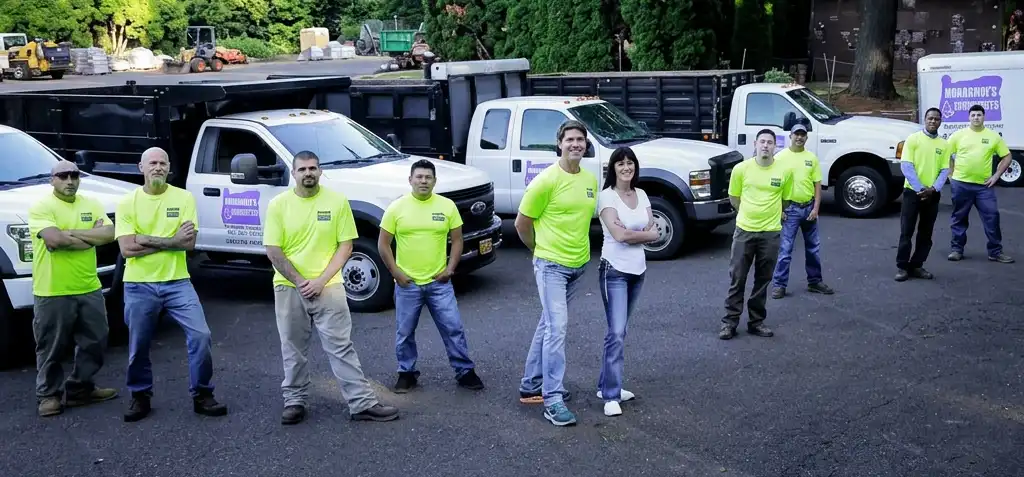
When you’re investing in landscaping projects for your property, you want a contractor who understands Portland-area soil, climate, and terrain. Here’s why homeowners across the metro area trust Monaghan’s.
38+
years in Portland
285+
five-star reviews
A+
BBB rating
3 yr
workmanship warranty
Licensed, bonded, insured — Oregon LCB# 7419 👈 click to verify
Free written estimates — on-site consultation, full scope before work begins
5-star commitment — we won't leave until we've earned your 5-star review, see our live Google reviews
Eco-friendly equipment — electric at 65-70 dB, quieter than conversation, no nasty exhaust fumes
65 dB
our equipment
85 dB
gas equipment
Committed to cleaner, quieter landscaping
We're committed to using clean, renewable energy. We've deployed all-electric mowers, trimmers, and blowers across our fleet. No exhaust fumes, no 85-decibel noise at 7 AM. Our electric equipment runs at conversation level, and we're converting our remaining vehicles to electric and hybrid next. Your neighbors will thank you.
Landscaping Contractor Services In Portland, OR
Retaining Wall Installation
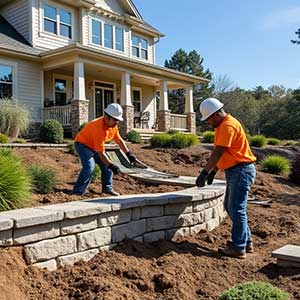
Retaining walls and drainage go hand in hand on Portland’s hilly properties. Every wall we build includes drainage behind it to prevent hydrostatic pressure failure, and many drainage projects include a wall to create level, usable space from a slope that’s been washing out.
New Sod Lawn Installation
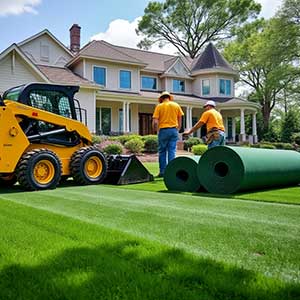
Drainage problems and dead lawns are usually the same problem. Clay soil that won’t drain kills grass from the roots up. We install drainage systems during the soil prep phase so your new sod has the foundation it needs to root and thrive through Portland’s wet season.
Automatic Sprinkler System Installation
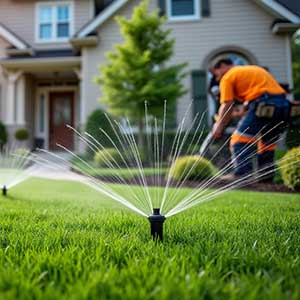
Drainage and irrigation are two sides of the same water management challenge. We coordinate sprinkler zone layout with drainage pipe routing so the systems complement each other instead of competing, and we install both during the same soil work to avoid trenching through a finished yard twice.

Artificial Turf Installation
Muddy, waterlogged yards that won’t grow grass are the number one reason Portland homeowners switch to artificial turf. If your drainage problems have killed the lawn for good, turf over a properly engineered drainage base gives you a clean, dry surface year-round with zero maintenance.
Paver Installation
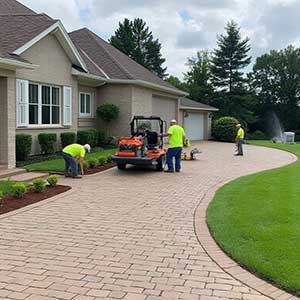
Water pooling against patios and walkways is one of the most common drainage complaints we hear. We install catch basins and channel drains alongside paver projects to route surface water away from hardscape edges, and permeable pavers let rainwater pass through instead of running off.
Drainage Installation
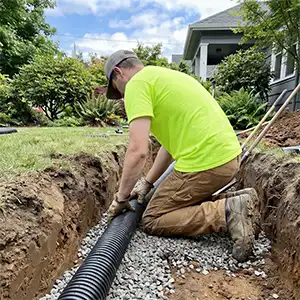
You’re already here! Whether it’s a French drain, catch basin, E-Z Flow system, grading correction, or full-property drainage design, this page covers every solution we offer for managing water on Portland properties.
Beyond our five core services, we handle a full range of residential and commercial landscaping projects across the Portland metro area.
Areas We Serve
Don't see your area? Give us a call, we probably serve your area too! Call (503) 847-9110
Monaghan’s Landscaping, As Seen On:


