
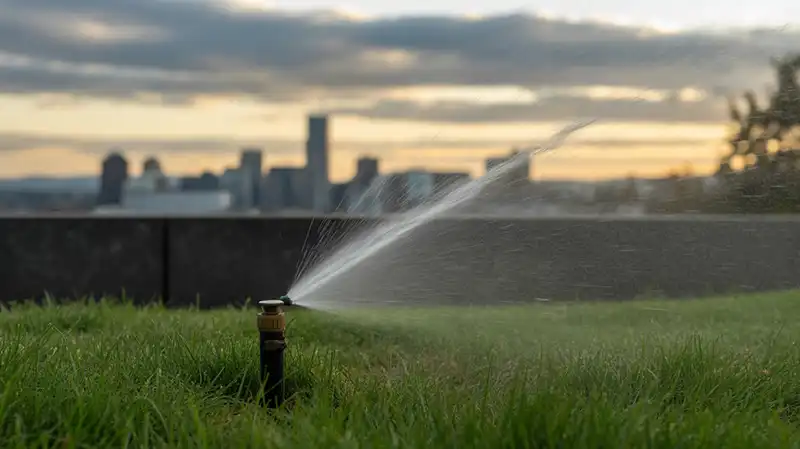
Imagine transforming your Portland lawn into a lush, green oasis despite the city’s unpredictable rains and dry summers. At Monaghan’s Landscaping Portland’s Trusted Experts Over 37 Years, we’ve spent decades mastering how seasonal weather patterns shape effective sprinkler system designs for local homes and gardens.
Understanding Portland’s Unique Seasonal Weather Patterns
Portland’s climate, nestled in the Pacific Northwest, features wet falls and winters transitioning to bone-dry summers, profoundly influencing irrigation needs. Winter months from November to March bring heavy rainfall, often exceeding 30 inches annually, saturating soils around neighborhoods like West Hills and Laurelhurst Park areas. This deluge can lead to waterlogging if sprinkler systems lack smart shut-off features. Come summer, from June to September, temperatures climb into the 80s and 90s with scant precipitation, turning yards near the Willamette River or Washington Park parched without precise watering schedules.
Our team at Monaghan’s Landscaping, with over 37 years serving Portland homeowners, has witnessed firsthand how these patterns demand adaptive designs. For instance, properties near Forest Park endure misty mornings year-round, while sunnier spots by Sellwood Bridge require drought-resistant zoning. By analyzing microclimates specific to areas like Alberta Arts District or near Providence Park, we tailor systems that conserve water during rainy seasons and hydrate efficiently in dry spells.
Key Impacts of Winter Rain on Sprinkler Design
Portland winters unleash relentless downpours, averaging 150 rainy days yearly, which can overwhelm standard irrigation setups. Excess moisture risks root rot in lawns near Tryon Creek State Natural Area or soggy flower beds in Irvington Historic District. That’s why our automatic sprinkler installations incorporate rain sensors and soil moisture detectors, automatically pausing cycles during heavy precipitation. We’ve installed these in hundreds of Southwest Portland homes along Canyon Road, preventing overwatering and reducing utility bills by up to 30 percent.
Drainage integration is crucial; our designs channel runoff away from sprinklers using subtle grading techniques honed from projects in Beaverton-adjacent lots. For sloped yards in the West Hills, we add check valves to stop backflow, ensuring clean water delivery post-rain. This approach not only protects your system but enhances landscape health, drawing from our extensive experience with Pacific Northwest conditions.
Summer Drought Challenges and Sprinkler Adaptations
When summer heat scorches Portland, evapotranspiration rates soar, demanding consistent deep watering for turf near Delta Park or gardens by the Pearl District. Standard timers fail here; our programmable controllers adjust based on evapotranspiration data, delivering 1-1.5 inches weekly without waste. In East Portland neighborhoods like Montavilla, where clay soils retain heat, we deploy low-precipitation rate rotors to avoid runoff on compacted ground.
Drip lines for shrub borders near Reed College prove invaluable, sipping water slowly to combat July-August dry spells. Monaghan’s has optimized these for sun-exposed West Linn properties, boosting plant survival by integrating weather-linked apps that forecast local conditions from PDX airport data.
Spring and Fall Transition Periods: Balancing Act
Spring brings erratic showers mixed with warming temps, ideal for cool-season grasses in Hosford-Abernethy but tricky for emerging perennials. Fall mirrors this with cooling rains prepping for dormancy around Buckman Field. Our zone-specific designs, with 4-8 zones per system, allow fine-tuned schedules—shorter cycles for rain-prone North Portland, longer for sunnier Hawthorne areas.
We’ve refined these through installations near major intersections like I-5 and Sandy Boulevard, where variable shade from mature oaks affects evaporation. Smart ET controllers sync with Portland’s micro-weather, ensuring even coverage without fungal issues from overwatering.
Essential Sprinkler Components Tailored to Portland Weather
Controllers: Weather-responsive models with rain delays are non-negotiable. Our preferred brands feature Wi-Fi connectivity for remote tweaks during surprise showers near Lloyd Center.
Heads and Nozzles: Multi-stream rotors for large lawns in St. Johns resist wind drift common in gusty Willamette Valley summers. MP Rotators minimize misting losses.
Piping and Valves: Schedule 40 PVC withstands freeze-thaw cycles in outer Southeast Portland, paired with anti-siphon valves for backflow prevention per city codes.
Sensors: Rain clips and soil probes auto-adjust, proven in our Automatic Sprinkler System Installation Services Tailored for Portland Yards across the metro area.
Soil Types Across Portland and Irrigation Adjustments
Portland’s soils vary dramatically—sandy loams in Southwest near Council Crest drain fast, needing frequent light watering, while heavy clays in outer Northeast hold moisture longer. Our site assessments, including percolation tests, dictate emitter spacing: closer in sands near Gabriel Park, wider in clays by Mall near Jantzen Beach.
For raised beds in urban lots off Division Street, subsurface drip conserves water amid variable rains. This expertise stems from 37 years navigating PNW soils for sustainable outcomes.
Water Conservation in Portland’s Eco-Conscious Climate
With Portland’s push for sustainability, our systems cut usage by 40-50% via high-efficiency nozzles and cycling/soaking methods. Native plant zones near Oaks Bottom reduce demands, aligning with city rebates for smart irrigation. We’ve helped West Hills clients near Pittock Mansion achieve lush yards with 25% less water, integrating permeable paving for stormwater management.
Case Studies from Monaghan’s Portland Installations
In a Laurelhurst home, heavy winter rains flooded the yard until our rain-sensor-equipped system and French drains balanced moisture, saving $200 yearly on bills. Another West Linn project used ET controllers to thrive through 2023’s record heat dome, maintaining turf near Bush’s Pasture Park without waste.
A Hawthorne Boulevard property featured zoned drip for edibles, adapting to foggy falls and sunny springs, yielding bountiful harvests. These real-world examples showcase our mastery of local weather nuances.
Installation Best Practices for Seasonal Resilience
Site surveys precede every job, mapping sun exposure, wind patterns, and slopes from Washington Park to the Columbia River Gorge edges. We bury lines 12 inches deep to dodge mower damage and winter upheavals. Testing phases simulate seasonal extremes, ensuring reliability.
Post-install, we train owners on apps for real-time monitoring, vital during El Niño winters or La Niña droughts affecting Portland metro.
Maintenance Tips for Year-Round Performance
Winterize by mid-October—blow out lines to prevent freezes common below 32°F in Eastmoreland. Spring startups check for clogs from leaf debris near Mt. Tabor. Annual audits adjust for shifting plant needs in Sellwood gardens.
Our maintenance plans, offered alongside installations, include seasonal tune-ups, extending system life by years while optimizing for Portland’s patterns.
Cost Considerations and ROI in Portland
Basic systems for 5,000 sq ft yards start around $4,500, scaling with zones and smart tech. ROI hits via water savings—up to $300/year—and 10% property value boosts. City incentives near Pioneer Courthouse Square enhance affordability.
Future-Proofing with Climate-Resilient Designs
With warming trends, we incorporate xeriscape elements and solar-powered controllers for Hollywood District lots. Climate models predict wetter winters, drier summers—our designs evolve accordingly.
Frequently Asked Questions
How do Portland’s rainy winters affect sprinkler system choices?
Portland’s winters deliver over 70% of annual rainfall, risking over-saturation without safeguards. Monaghan’s installs rain sensors that detect 1/8-inch precipitation and pause cycles, preventing root diseases in waterlogged lawns near Forest Park. We’ve customized these for West Hills properties where fog and drizzle persist, integrating soil moisture probes for precise reactivation. This setup saves water and protects pumps from strain during November-March deluges. Clients in Beaverton see 35% bill reductions, as systems adapt automatically to PNW patterns, ensuring health without manual intervention. For sloped yards by Tryon Creek, we add flow restrictors to manage runoff, blending irrigation with drainage for resilient landscapes year-round.
What summer adaptations are needed for Portland sprinkler designs?
Summers in Portland feature zero rain for months, with ET rates up to 0.25 inches daily. Our designs use weather-based controllers pulling data from local stations, scheduling deep, infrequent watering for roots near Delta Park. Low-angle nozzles combat windy evenings along the Willamette, while drip zones hydrate shrubs in Hawthorne without evaporation loss. In Montavilla’s heat-retaining clays, cycle-and-soak prevents pooling. These features, battle-tested in 100+ installs, maintain green turf amid 90°F heat waves, conserving 50% water versus manual methods. Smart apps notify of adjustments, keeping Pearl District yards envy-worthy.
Can sprinkler systems handle Portland’s clay soils effectively?
Heavy clays dominate outer Northeast Portland, swelling in rain and cracking in drought. Monaghan’s uses high-pop rotors with matched precipitation rates, spacing emitters 15-20 feet for even coverage without runoff near Jantzen Beach. Subsurface lines deliver water directly, bypassing surface compaction. Soil amendments like compost improve infiltration in East Portland projects, paired with tensionometers for real-time feedback. This approach sustains lawns through freeze-thaw cycles, as seen in our Gabriel Park installs where systems endured without failure. Annual audits ensure longevity, adapting to seasonal shifts for optimal performance.
How do we winterize sprinklers in Portland’s mild but wet climate?
Though rarely freezing, Portland pipes risk damage from standing water. By early November, we blow lines with compressed air at 80 PSI, clearing valves and heads for Laurelhurst homes. Controllers set to ‘off,’ sensors bypassed. For West Linn slopes, we drain low points manually. Spring reactivation includes pressure tests and nozzle cleans for debris from Tabor’s leaves. Our service prevents 95% of winter issues, as proven in decades of Southwest Canyon Lane area work. Clients avoid costly repairs, maintaining efficiency into blooming springs.
Are smart controllers worth it for Portland weather variability?
Absolutely—Portland’s microclimates from foggy mornings in Irvington to sunny afternoons in Sellwood demand precision. Smart ET controllers adjust run times daily via hyperlocal data, slashing usage 30-40%. Wi-Fi models allow remote tweaks during surprise rains near Providence Park. Integrated with rain gauges, they outperform manuals, as our Buckman installs demonstrate with sustained health sans waste. Upfront cost recouped in one season through rebates and savings, future-proofing against climate shifts.
What role do rain sensors play in Portland installations?
Rain sensors are vital, halting irrigation after 0.2 inches falls, countering 150+ rainy days. Calibrated for PNW intensity, they dry quickly to resume in dry spells near Reed College. Paired with freeze sensors for rare sub-32°F nights in outer areas, they protect systems comprehensively. Our Automatic Sprinkler System Installation Services Tailored for Portland Yards include them standard, yielding measurable savings and healthier landscapes across metro zones.
How many zones for a typical Portland yard sprinkler system?
Average 1/4-acre lot needs 4-6 zones, factoring sun/shade variance from Washington Park trees to open Hosford-Abernethy spaces. Lawns get rotors, beds drip lines. We’ve zoned 8+ for larger West Hills estates blending turf and natives. Site maps ensure overlap without dry spots, tailored to evapotranspiration peaks. This granularity handles seasonal swings, optimizing flow for pumps near major intersections like I-84 and 82nd.
Do Portland codes require backflow prevention in sprinklers?
Yes, per Portland Water Bureau, anti-siphon or RPZ devices prevent contamination. We install certified units during setup for compliance in all installs, tested annually. Essential for properties near lakes like Oaks Bottom, safeguarding public supply. Our licensed team handles permits seamlessly, as routine in 37 years of service.
How does wind influence sprinkler head selection in Portland?
Gusty Gorge winds and Valley breezes demand stream nozzles over sprays. MP Rotators arc precisely, resisting drift in St. Johns open areas. Low-trajectory models for elevated West Linn sites minimize loss. Tested in real conditions, they deliver uniform coverage, conserving water amid summer zephyrs.
What maintenance frequency for Portland sprinkler systems?
Monthly checks spring-fall, winterization twice yearly. Inspect heads, adjust arcs, clear filters from Division Street pollen. Annual audits recalibrate for plant growth. Our plans cover this for Alberta District clients, preventing 90% issues proactively amid wet-dry cycles.
Ready to Optimize Your Portland Landscape?
Seasonal weather shapes every sprinkler decision—partner with Monaghan’s for designs that thrive rain or shine. Contact us today for a custom assessment tailored to your neighborhood’s rhythms.