
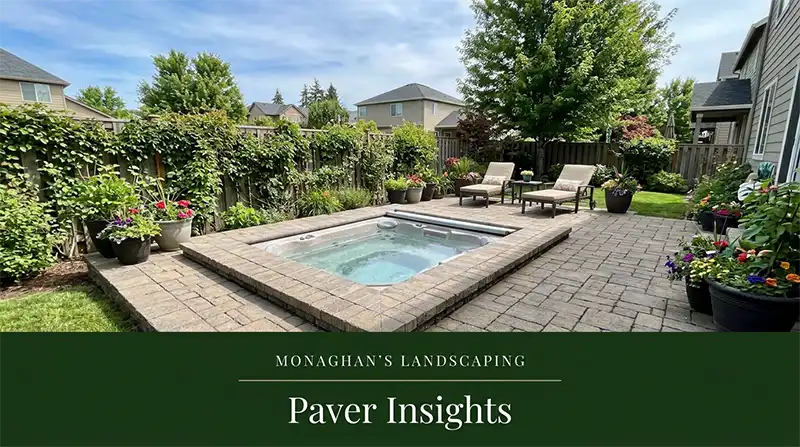
Permeable pavers look like standard pavers but function differently. The joints between the units are wider and filled with small aggregate instead of polymeric sand, allowing rainwater to pass through the surface and into a gravel reservoir underneath. The water infiltrates into the soil gradually instead of running off across the surface.
In Portland, where 43+ inches of annual rainfall creates significant stormwater runoff, permeable pavers are one option for managing water on residential properties. But they’re not the right fit for every situation. Here’s how they actually work, where they perform well, and where standard pavers with proper drainage are the better choice.
How Permeable Pavers Work
A permeable paver system has three layers working together:
The pavers. The units themselves look similar to standard concrete pavers but are manufactured with slightly wider spacing lugs or designed for open-joint installation. The gaps between pavers are typically 1/4 to 1/2 inch wide, filled with small crushed stone (usually #8 or #9 aggregate) that water passes through freely.
The reservoir base. Beneath the pavers, a bed of open-graded crushed stone (#57 or similar) acts as a temporary storage reservoir. During a rain event, water passes through the paver joints, through a bedding layer of small aggregate, and into this reservoir where it’s held until the underlying soil can absorb it. The reservoir depth depends on the soil’s infiltration rate and the volume of water it needs to handle.
The subgrade. This is the native soil at the bottom. In Portland, that’s usually clay. Clay drains slowly, which means the reservoir needs to be deeper to hold water longer while it gradually percolates into the ground. Some installations include an underdrain (perforated pipe at the base of the reservoir) that routes excess water to a discharge point when the soil can’t absorb it fast enough.
Where Permeable Pavers Work Well in Portland
Patios with no nearby storm drain access. If your patio project adds impervious surface to a property that doesn’t have an easy discharge point for a catch basin or French drain, permeable pavers manage the water on-site without needing pipe routing to a remote outlet.
Driveways on flat lots. A flat driveway that pools water at the garage door or along the house can benefit from permeable pavers because the water goes down through the surface instead of sheeting toward the foundation. Properties in Beaverton, Tigard, and Milwaukie with relatively flat grading are good candidates.
Walkways through garden areas. Permeable paths let rainwater reach the soil and plant roots instead of running off into the lawn. This is especially useful in established landscapes where regrading or adding pipe would disturb roots and beds.
Properties with stormwater management requirements. Portland’s stormwater management manual requires that new impervious surfaces on certain projects manage runoff through retention, infiltration, or treatment. Permeable pavers can satisfy these requirements on-site without separate detention systems.
Where Permeable Pavers Are Not the Best Choice
Heavy clay soil with no underdrain. Portland’s clay drains so slowly that a permeable paver system without an underdrain can become a bathtub during sustained rain. The reservoir fills up, the clay won’t absorb the water fast enough, and the surface floods from below. On heavy clay, permeable pavers need an underdrain to function reliably, which adds cost and complexity that may push the project toward standard pavers with conventional drainage instead.
Sloped sites. Permeable pavers work best on flat or gently sloped surfaces where water has time to infiltrate through the joints. On a slope, water runs across the surface too quickly to enter the joints and behaves the same as it would on standard pavers. Hillside properties in West Linn, Lake Oswego, and the West Hills typically need conventional drainage solutions rather than permeable surfaces.
High-sediment areas. The aggregate-filled joints can clog with fine sediment over time, especially if the paver surface receives runoff from adjacent dirt, mulch beds, or areas without ground cover. Once the joints clog, the surface becomes effectively impervious. Regular maintenance (vacuuming or pressure washing the joints and refilling with clean aggregate) prevents this, but it’s an ongoing commitment.
Areas with heavy vehicle traffic. While permeable pavers can handle residential vehicle loads, the open-joint design is less stable under repeated turning forces (like the pivot point at the end of a driveway). Standard interlocking pavers with polymeric sand joints handle this better. For more on how we approach paver installation for driveways, see our service page.
Permeable vs. Standard Pavers: Cost Comparison
Permeable paver systems typically cost 15 to 30% more than standard paver installations of the same size. The premium comes from the deeper excavation (more aggregate for the reservoir base), the underdrain pipe and fittings (when required on clay soil), and the specialized aggregate for joints and bedding.
However, permeable systems can offset or eliminate the cost of separate drainage infrastructure (catch basins, French drains, pipe routing) that a standard paver installation would need. On a project where significant drainage work would be required anyway, permeable pavers sometimes come out even or ahead on total cost.
The honest assessment: on most Portland residential properties with clay soil, standard pavers with a properly designed drainage system (catch basins, grading, pipe routing) are more reliable and often more cost-effective than permeable pavers. Permeable pavers are the right choice when site-specific conditions favor infiltration over pipe-based drainage, or when stormwater regulations specifically call for on-site infiltration.
Maintenance Requirements
Permeable pavers need more maintenance than standard pavers to keep working as designed:
Joint aggregate replenishment. The small stone in the joints settles and gets displaced over time. Check annually and add aggregate as needed to keep the joints full and permeable.
Surface vacuuming or pressure washing. Every 1 to 2 years, the joint aggregate should be vacuumed out and replaced with fresh stone to remove accumulated sediment. This is the maintenance step most homeowners skip, and it’s the reason most residential permeable paver systems lose performance over time.
Keep sediment sources away. Don’t direct bare soil runoff, mulch, or leaf debris onto the paver surface. Blow or sweep leaves regularly in fall and winter. The cleaner the surface stays, the longer the joints remain functional.
How to Decide
If your property has relatively flat terrain, you’re willing to commit to periodic joint maintenance, and you want to manage stormwater on-site without pipe and catch basins, permeable pavers are worth considering. If your property sits on heavy clay, has slopes, or you prefer a lower-maintenance surface, standard pavers with conventional drainage are the more practical choice.
We install both systems and recommend based on site conditions, not product preference. The free on-site consultation includes soil and drainage assessment so the recommendation is based on what your property actually needs.
Call (503) 847-9110 or request your free estimate online.
Learn More About Pavers
Paver Patio Design Ideas for Portland Backyards — Patterns, materials, and layouts that work in the Pacific Northwest.
Why Drainage and Grading Matter for Paver Projects in Portland — What goes under the pavers and why it determines whether they last.
Backyard Drainage and Grading Guide — How to evaluate your yard and understand your drainage options.
How Much Does a Paver Patio Cost in Portland? — 2026 pricing by project size, materials, and what drives cost.
Pavers vs. Concrete: Which Is Better for Portland? — A side-by-side comparison of durability, cost, drainage, and maintenance.
How Long Do Pavers Last in Portland? — Maintenance schedule, common issues, and what to expect over 25+ years.