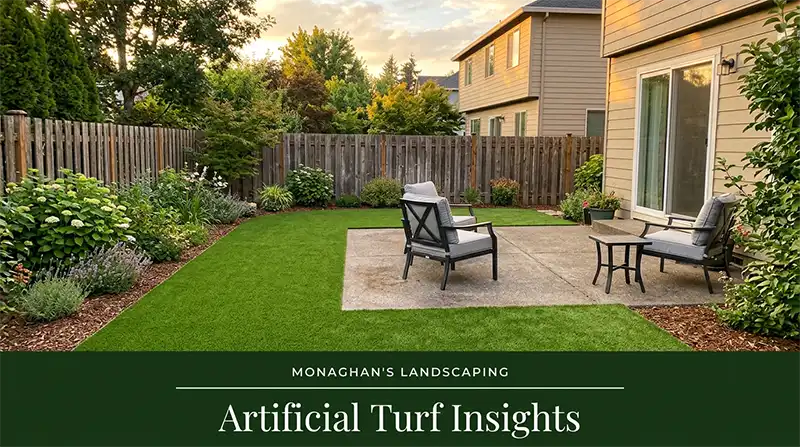
Yes, artificial turf gets hot in direct sun. On a 90°F day, a turf surface in full sun can reach 140 to 170°F. That’s too hot for bare feet, pet paws, and young children. This is the most common concern homeowners raise when considering turf, and it’s a legitimate one. But the impact in Portland is different from what you’d experience in Phoenix or Dallas, because Portland’s climate limits the number of days this actually matters. Here’s our overview of how we install artificial turf in Portland, including how we address heat in the design.
How Hot Does Turf Actually Get in Portland?
Surface temperature depends on three factors: air temperature, direct sun exposure, and wind. Portland’s climate moderates all three compared to southern cities.
Air temperature: Portland averages only 12 to 15 days per year above 90°F, and 1 to 3 days above 100°F. The majority of the year, daytime highs are in the 50s to 70s, well below the threshold where turf heat becomes uncomfortable.
Sun exposure: Portland is overcast roughly 200 days per year. Cloud cover dramatically reduces turf surface temperature. On a 75°F partly cloudy day, turf stays comfortable. On a 75°F day with unbroken sun, it warms but isn’t painful. The extreme temperatures (150°F+) only occur during sustained direct sun at air temperatures above 85°F.
Practical impact: In a typical Portland year, turf heat is a factor for roughly 20 to 30 days, concentrated in July and August. For the other 335+ days, the surface temperature is comfortable or irrelevant (nobody is walking barefoot on their lawn in November).
By comparison, Phoenix has 100+ days above 100°F, and turf surface temperatures there regularly exceed 180°F. Portland’s heat concern is real but seasonal and limited.
What Makes Turf Hot (and What Doesn’t)
Color matters. Darker turf absorbs more heat than lighter turf. A deep green turf with dark brown thatch will run 10 to 15°F hotter than a lighter olive-green product in the same sun exposure. If heat is a primary concern, a lighter color blend reduces peak temperatures without looking unnatural.
Infill matters. Standard silica sand and crumb rubber infill both absorb and retain heat. Acrylic-coated sand (sometimes called “cool infill”) reflects more solar energy and can reduce surface temperature by 10 to 15°F compared to standard infill. The cost premium is $0.75 to $1.50 per square foot, which adds $375 to $750 on a 500-square-foot installation.
Pile height matters slightly. Taller fibers shade the infill layer from direct sun, which reduces the surface temperature at infill level (where your feet actually contact). The difference is modest (5 to 10°F) but contributes to overall comfort.
Location on the property matters most. A turf area on the north side of the house that gets afternoon shade from the building stays dramatically cooler than a south-facing area in full sun. Trees, fences, and adjacent structures that provide partial shade during the hottest hours (2 to 5 PM) make a bigger difference than any product selection.
How to Manage Heat on Your Turf
Quick Spray with the Hose
The fastest and simplest solution. A 30-second spray across the turf surface drops the temperature 40 to 60°F almost immediately. The water evaporates within 15 to 20 minutes on a hot day, but the cooling effect lasts 30 to 45 minutes. If you’re heading outside to use the yard on a hot afternoon, spray it down first. This is what most Portland turf owners do and it works well because you’re only doing it 20 to 30 times per year.
Shade Structures
A pergola, shade sail, or patio umbrella over the most-used section of turf keeps that area usable even on the hottest days. Shade reduces turf surface temperature by 30 to 50°F. Many Portland homeowners who install turf for a patio surround or entertaining area add shade as part of the same project.
Cool Infill
Acrylic-coated sand infill reflects solar energy rather than absorbing it. It’s the most effective product-level solution for heat reduction. If you’re installing turf in a full-sun area where barefoot use is expected (a play area, a pool surround, a yoga/exercise area), cool infill is worth the cost premium.
Strategic Placement
During the design phase, we evaluate sun exposure across the yard at different times of day. If the primary turf area has full south or west sun exposure with no shade sources, we’ll discuss whether that’s the best location or if shifting the turf zone to a partially shaded area would give better year-round comfort. Sometimes the best heat solution is design, not product.
Pets and Heat
Dogs’ paws are sensitive to hot surfaces. The same pavement test applies to turf: if the surface is too hot for the back of your hand, it’s too hot for paw pads. On Portland’s hottest days, limit dog access to turf in direct sun during peak afternoon hours, or spray the surface before letting them out.
Dogs generally self-regulate. They’ll seek shade, move to the concrete patio (which is often cooler than turf in direct sun), or come back inside. But if your turf area is the only outdoor space for the dog with no shade option, heat management matters during July and August.
How Portland Compares to Other Cities
Portland’s turf heat concern is real but proportionally small:
Phoenix: 100+ days above 100°F. Turf reaches 180°F+ regularly. Heat is a significant design constraint year-round from May through October.
Dallas: 70+ days above 90°F. Extended heat season from June through September.
Portland: 12 to 15 days above 90°F. Heat is a factor for roughly 20 to 30 days in July and August only. The rest of the year, Portland’s mild, overcast climate keeps turf surfaces comfortable.
Portland is one of the better climates for artificial turf because the limited heat exposure extends fiber lifespan (less UV degradation), reduces infill breakdown, and limits the days where heat management is needed.
Should Heat Concern Stop You from Installing Turf?
For most Portland homeowners, no. The heat issue affects 20 to 30 days per year and is manageable with a garden hose spray, shade, or cool infill. If your turf area is in full south-facing sun with no shade and your primary use is barefoot activity with young children, the heat concern is worth taking seriously during the design phase. For dog owners, pet yards, general lawn replacement, and areas with any partial shade, heat is a minor seasonal inconvenience, not a dealbreaker.
We address heat during every turf consultation, evaluating your specific sun exposure and recommending product, infill, and placement options accordingly.
Call (503) 847-9110 or request your free estimate online.
Learn More About Artificial Turf
How to Maintain Artificial Turf in Portland — Seasonal care guide for Portland’s climate.
Can You Install Turf Over an Existing Lawn or Concrete? — What needs to happen underneath before turf goes down.
Is Artificial Turf Better for the Environment? — An honest look at the tradeoffs.
How Much Does Artificial Turf Cost in Portland? — 2026 pricing by project size and turf type.
Artificial Turf vs. Natural Grass for Portland Yards — Side-by-side comparison of cost, maintenance, and performance.