
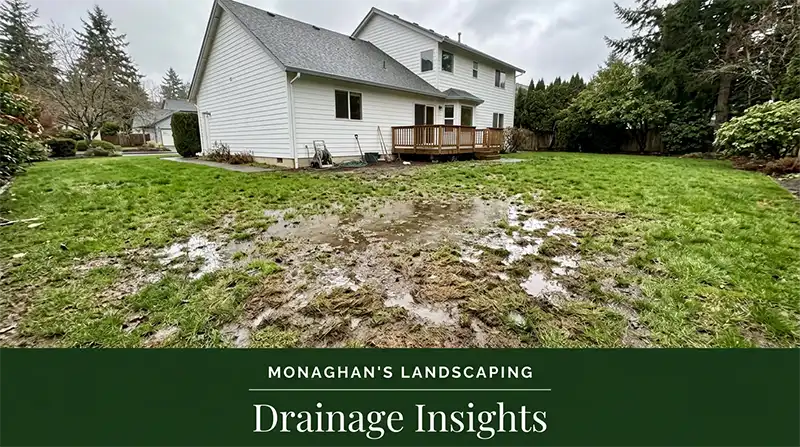
A French drain looks simple in a YouTube video: dig a trench, lay some pipe, cover it with gravel, done. And on paper, the concept is simple. But the execution on Portland’s clay soil, with Portland’s rainfall volume, is where DIY French drains fail. Here’s an honest breakdown of what’s involved, what goes wrong most often, and how to decide whether to do it yourself or hire someone.
What a French Drain Installation Actually Involves
Before you can evaluate whether this is a realistic DIY project, you need to understand the full scope of work. It’s more than digging.
Utility locates. Before any digging, you need to call 811 to have underground gas, water, electric, sewer, and cable lines marked. Hitting a gas line or cutting a fiber optic cable turns a weekend project into an emergency. This step is free and legally required in Oregon.
Trenching. A standard French drain trench is 12 to 18 inches wide and 18 to 24 inches deep. For a 50-foot run, that’s roughly 1.5 to 2 cubic yards of soil to excavate. On Portland’s clay, hand-digging a trench this size takes most people two to three full days of hard physical labor. Clay is dense, sticky, and heavy when wet.
Establishing slope. The trench must slope consistently from the inlet end to the discharge point, typically at a minimum of 1% grade (about 1 inch of drop per 8 feet of run). If the slope isn’t consistent, water pools in low spots inside the pipe instead of flowing to the outlet. Checking grade requires a laser level or string line, not just eyeballing it.
Filter fabric. The entire trench gets lined with filter fabric before any gravel goes in. The fabric wraps around the gravel and pipe to prevent Portland’s clay from migrating into the drainage channel and clogging it. If you skip the fabric or leave gaps, the drain will clog within a few years.
Gravel and pipe placement. You lay a bed of clean, washed gravel (not crushed rock with fines) in the bottom of the trench, set the perforated pipe on top with the holes facing down, then cover the pipe with more gravel until the trench is filled to within a few inches of the surface. The fabric is then folded over the top of the gravel before backfilling with soil.
Discharge routing. The water collected by the French drain needs somewhere to go. A pop-up emitter at the surface, a dry well, or a connection to an existing storm drain are the common options. The discharge point needs to handle the volume of water the drain collects during a heavy rain event, and it needs to route that water away from the house, not toward a neighbor’s property.
Surface restoration. After backfilling, the disturbed area needs to be regraded and the lawn reseeded or resodded.
Where DIY French Drains Go Wrong in Portland
We repair and replace failed drainage systems regularly. The same mistakes show up over and over on DIY installations.
No Filter Fabric (or Gaps in the Fabric)
This is the number one reason French drains fail in Portland. Clay particles are tiny and persistent. Without continuous filter fabric wrapping the gravel bed, clay migrates into the gravel within one to three rainy seasons and fills the voids that water is supposed to flow through. Once the gravel is clogged with clay, the drain stops working and the only fix is to dig it up and start over.
Inconsistent Trench Slope
A French drain that doesn’t slope consistently creates standing water inside the pipe. Water sits in the low spots instead of flowing to the outlet. Over time, sediment settles in those low spots and the drain clogs from the inside. Getting consistent slope across a 50 to 100 foot trench on uneven ground requires careful measurement at every stage of the dig.
Wrong Gravel
Crushed gravel with fines (the dust and small particles mixed in with the rock) packs tight over time and reduces drainage capacity. Clean, washed 3/4-inch drain rock is the right material. It costs more per yard than crushed base rock, but using the wrong gravel defeats the purpose of the drain. We see DIY installations where the homeowner used whatever gravel was cheapest at the landscape supply yard, and the drain was half-clogged within two years.
Inadequate Discharge
A French drain collects water, but it still has to put that water somewhere. Ending the pipe in the middle of the yard, against a fence, or at a low spot that just pools again doesn’t solve the problem. It moves it. The discharge point needs enough fall and capacity to handle the full volume of water the drain collects during a sustained Portland rain event, not just a light drizzle.
Hitting Utilities
Even with 811 markings, utility lines don’t always run where you expect. Irrigation lines, landscape lighting wires, and old abandoned pipes won’t be marked by 811 because they’re private utilities. Trenching through a sprinkler mainline or cutting a low-voltage lighting cable is a common DIY setback that adds time and cost to repair.
When DIY Might Be Reasonable
There are situations where a handy homeowner with the right tools and realistic expectations can install a functional French drain:
Short runs in accessible areas. A 20-foot trench along a garden bed or at the base of a small slope is manageable. A 100-foot foundation perimeter drain is not a weekend project.
Sandy or loamy soil. If your property has well-draining soil (uncommon in Portland, but it exists in some areas of Beaverton and Hillsboro near the Tualatin Valley), the digging is easier and the filter fabric is less critical.
Simple discharge. If the outlet end of the trench is downhill and you can daylight the pipe at the surface without crossing hardscape, routing discharge is straightforward.
No utility conflicts. If the trench runs through open lawn with no irrigation, lighting, gas, or cable lines in the path.
Even in these cases, rent a laser level to verify slope, buy quality filter fabric, and use clean washed drain rock. The materials are a small fraction of the total cost. Cutting corners on materials to save money on a DIY project is the fastest way to end up paying a contractor to redo it.
When to Hire a Professional
Clay soil. Most Portland properties sit on clay. The excavation is harder, the filter fabric is more critical, and the gravel volume is larger than on well-draining soil. Clay also makes slope accuracy more important because there’s no margin for error in percolation.
Foundation drainage. Water against a foundation is too high-stakes for trial and error. If the drain doesn’t intercept the water completely, the damage continues. Foundation drains need to be installed at the correct depth relative to the footing, with proper slope and discharge capacity.
Long runs or multiple drains. A full-property drainage system with 100+ feet of pipe, multiple catch basins, and grading corrections is a construction project that requires equipment, precise grading, and professional execution.
Hillside properties. Slopes in West Linn, Lake Oswego, Happy Valley, and the West Hills add complexity because water moves faster, the trench must intercept water at the right elevation, and erosion during construction is a real risk.
Permit situations. If the project connects to the city’s storm system or falls in an environmental overlay zone, a contractor handles the permitting and ensures compliance. See our post on drainage permits in Portland for details.
The Cost Comparison
A common argument for DIY is saving money. Here’s how the numbers typically compare for a 50-foot residential French drain in Portland:
DIY materials cost: $400 to $800 for pipe, gravel, filter fabric, fittings, and a pop-up emitter. Add $100 to $200 for a laser level rental. Add $150 to $300 for a trencher rental if you don’t want to hand-dig. Total: roughly $650 to $1,300 in materials and rentals, plus two to four days of your time.
Professional installation: $1,500 to $3,500 for the same 50-foot French drain, including all materials, labor, surface restoration, and a workmanship warranty. The drain is installed in one day, graded with precision, and backed by a guarantee. For a full pricing breakdown, see our French drain cost guide.
The gap between DIY and professional is narrower than most people expect, especially once you factor in tool rentals, material delivery, and the value of your time. And if the DIY installation fails and needs to be redone, the total cost exceeds what the professional installation would have been in the first place.
The Bottom Line
You can install a French drain yourself if the run is short, the soil cooperates, the discharge is simple, and you’re willing to invest the time to do it right. For most Portland properties, the clay soil, the rainfall volume, and the stakes (foundation damage, yard flooding, neighbor disputes) make professional installation the safer and often more cost-effective choice.
We provide free on-site drainage assessments throughout the Portland metro area. If you’re on the fence between DIY and hiring a pro, a consultation gives you an accurate scope and price so you can make the comparison with real numbers instead of estimates.
Call (503) 847-9110 or request your free estimate online.
Learn More About Drainage
How Much Does a French Drain Cost in Portland? — 2026 pricing by project type and what drives cost.
5 Signs Your Portland Yard Has a Drainage Problem — How to spot drainage issues before they cause serious damage.
French Drain vs. Catch Basin vs. E-Z Flow — Which drainage system is right for your property.
Do You Need a Permit for Drainage Work in Portland? — What triggers a permit and who handles it.
Backyard Drainage and Grading Guide — How to evaluate your yard and understand your options.