
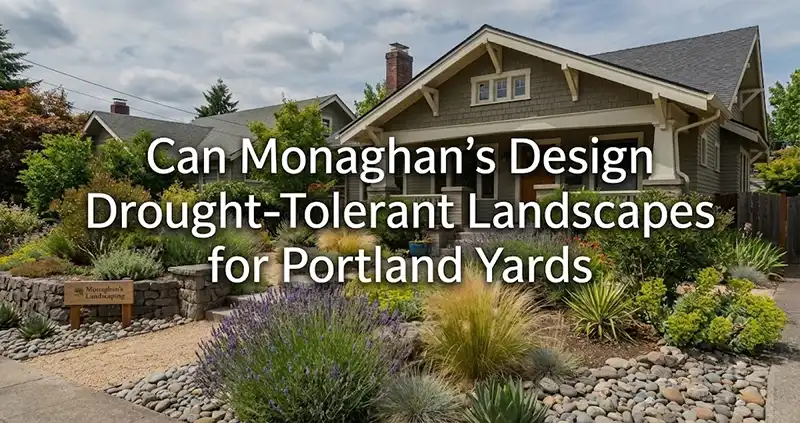
Can Monaghan’s design drought‑tolerant landscapes for Portland yards? Yes, Monaghan’s Landscaping has the local experience, services, and project history to design and install drought‑tolerant landscapes for Portland properties, and this post explains how they approach planning, plant selection, irrigation, hardscape integration, and ongoing stewardship to create resilient yards tailored to Portland neighborhoods such as Sellwood‑Moreland, Laurelhurst, and Lents.
Why drought‑tolerant landscaping matters in Portland
Portland, Oregon has a temperate climate with wet winters and relatively dry summers, making water conservation and drought resilience essential for sustainable yards. Drought‑tolerant landscaping reduces irrigation needs, lowers maintenance and utility costs, enhances biodiversity by using native and regionally adapted plants, and improves long‑term landscape resilience in the face of variable precipitation and heat events. Homeowners across Portland neighborhoods, from the slopes near Forest Park to yards around Laurelhurst and the Willamette River corridor, are increasingly seeking durable, water‑wise landscapes that still deliver year‑round curb appeal and functional outdoor living spaces.
Monaghan’s Landscaping: local experience and services that support drought‑tolerant design
Monaghan’s Landscaping has been serving the Portland metro area for decades, offering a full range of landscape design and installation services that align with drought‑tolerant principles. Their capabilities include landscape design and planning, planting services, irrigation and drainage systems, hardscaping, and seasonal services, each of which plays a critical role in building water‑efficient yards.
Key services that enable drought‑tolerant projects:
- Landscape design and planning: Site analysis, conceptual and detailed plans, plant placement, and specifications allow designers to maximize microclimates, shade, and soil management to reduce water needs.
- Planting services (softscaping): Professional selection and installation of trees, shrubs, groundcovers, and perennials suited to local conditions ensure plant success while minimizing irrigation.
- Irrigation and drainage systems: Properly designed and installed systems, including smart controllers and targeted drip irrigation, deliver water efficiently to new and existing plantings.
- Hardscaping and site features: Patios, permeable paving, retaining walls, and mulched beds help conserve moisture, reduce runoff, and create functional outdoor living areas that complement drought‑tolerant planting schemes.
Monaghan’s explicitly lists these service areas as part of their offering, which indicates the company has the in‑house capabilities required to design and implement water‑conscious landscapes for Portland clients.
How Monaghan’s approaches a drought‑tolerant project (step‑by‑step)
A practical drought‑tolerant landscape project follows a methodical process. Below is a step‑by‑step framework adapted to the services and processes Monaghan’s advertises, showing how they can deliver drought‑resilient outcomes for Portland yards.
1. Consultation and site analysis
Every drought‑wise project begins with an on‑site consultation and detailed site analysis. Monaghan’s identifies sun exposure, slope, soil type, existing vegetation, microclimates, drainage patterns, and irrigation infrastructure during this phase. Understanding these variables allows the design team to place plants and hardscape where they will thrive with minimal supplemental irrigation.
2. Conceptual design and plant selection
Using conceptual sketches or digital renderings, Monaghan’s develops a layout that balances aesthetics, function, and water efficiency. Plant palettes emphasize native or regionally adapted species, drought‑tolerant perennials, and efficient groundcovers. By grouping plants with similar water needs, known as hydrozoning, the design reduces wasteful overwatering and simplifies irrigation scheduling.
3. Detailed plans and specifications
Monaghan’s produces comprehensive plans that specify soil amendments, mulch depths, irrigation zones, plant sizes, spacing, and construction materials. These specifications are crucial for installers to execute a sustainable, long‑lasting landscape. Detailed plans also make it easier to provide accurate bids and timelines for homeowners in neighborhoods across Portland.
4. Soil preparation and amendments
Healthy soil retains moisture and supports drought‑tolerant plants. Monaghan’s approach includes assessing soil quality and applying appropriate amendments, such as organic compost or gypsum, where needed to improve structure, porosity, and nutrient availability. Proper soil preparation reduces transplant shock and helps plants establish with less supplemental water.
5. Efficient irrigation design
Irrigation systems are a linchpin of drought‑tolerant landscapes. Monaghan’s provides irrigation and drainage systems as a core service. For drought‑tolerant projects they recommend and install efficient, targeted systems, such as low‑flow drip lines, bubbler systems for larger shrubs and trees, and smart controllers that adjust watering based on weather or soil moisture sensors. These technologies reduce overwatering and ensure water is delivered where and when plants need it most.
6. Mulch, groundcovers, and microclimate management
Mulch conserves soil moisture, moderates soil temperature, and suppresses weeds. Combined with permeable hardscape, strategic shade from trees, and properly chosen groundcovers, these elements create microclimates that reduce evaporation and extend plant survivability during dry spells.
7. Quality installation and hardscape integration
Monaghan’s emphasizes quality workmanship and durable materials for patios, walkways, and retaining walls. Integrating hardscape features reduces turf area (which is often high‑water), creates functional outdoor living zones, and facilitates rainwater capture strategies such as permeable pavers and bioswales.
8. Establishment phase and maintenance plan
The first two summers after installation are critical. Monaghan’s outlines seasonal planting and maintenance services to help new plantings establish with minimal water through staged irrigation reductions and targeted care. For residential projects Monaghan’s focuses on design and installation and can provide guidance on maintenance routines or recommend local maintenance partners when ongoing mowing and detailed upkeep are required.
Plant palettes and species suited to Portland drought‑tolerant landscapes
A successful water‑wise yard uses plants adapted to Portland’s climate. While exact plant lists should come from the landscape designer in context of a specific site, typical categories and examples that Monaghan’s designers can use include:
- Native and regionally adapted trees: Pacific madrone (Arbutus menziesii), Oregon white oak (Quercus garryana), and drought‑tolerant cultivars of maple and cedar where appropriate.
- Shrubs and subshrubs: Manzanita, Ceanothus (California lilac), lavender, and drought‑tolerant heathers that offer seasonal interest with low water demands.
- Perennials and grasses: Native bunchgrasses, carex species, sedums, and ornamental grasses that form resilient, low‑water groundcovers.
- Groundcovers and low‑water alternatives to turf: Creeping thyme, native sedges, and drought‑tolerant moss or fescues in shaded microclimates.
Monaghan’s plant selection strategy pairs these species based on sun exposure and soil conditions to maximize survival and minimize irrigation.
Irrigation best practices Monaghan’s can implement
Monaghan’s irrigation services are central to establishing a drought‑tolerant landscape. Best practices they implement include:
- Smart controllers that reduce watering during cool, rainy periods and increase it during hot spells.
- Drip irrigation for planting beds to target roots and avoid evaporative loss from spray systems.
- Zoned irrigation that groups plants with similar water requirements.
- Soil moisture sensors and rain shutoff devices to avoid unnecessary watering during wet periods.
- Watering schedules that favor deep, infrequent watering to encourage deep root growth.
Hardscape strategies that support drought resilience
Monaghan’s hardscape offerings, patios, permeable paving, retaining walls, and walkways, can reduce water demand while increasing usable outdoor space. Permeable surfaces allow infiltration to recharge soils, while retaining walls and terraces create level planting opportunities on Portland’s hilly lots (for example in neighborhoods near Council Crest or the Sylvan region) that reduce erosion and improve water retention in planting pockets.
Case examples and real project signals
Monaghan’s public profile and service pages demonstrate decades of work in the Portland metro area, including projects that require retaining walls, sod and lawn installations, automated sprinkler systems, and paver installations. Their experience since inception, more than three decades, supports their capacity to handle comprehensive landscape rewrites that convert traditional lawns into drought‑tolerant yards. Clients in Portland have access to their expertise for both design and construction, and Monaghan’s long operating history in neighborhoods across the city gives them contextual knowledge about local soils, microclimates, and permitting processes.
Example project types they commonly handle and that apply to drought conversions include:
- Removal of high‑water turf and replacement with artificial turf or low‑water plantings and permeable paving.
- Installation of efficient irrigation systems during landscape renovations.
- Construction of terraces and retaining walls to create planting zones and reduce runoff on sloped Portland lots.
Permitting, site constraints, and neighborhood context in Portland
Portland property owners must sometimes address permitting and neighborhood constraints, especially in historic districts like the Alphabet District or Laurelhurst. Monaghan’s long tenure in the metro area equips them to navigate local requirements for hardscaping, tree work, and irrigation upgrades. They understand how to coordinate with homeowners associations and local bureaus when projects involve street trees, curb cuts, or significant site changes.
Cost considerations and return on investment
Drought‑tolerant conversions vary widely in cost depending on scope. Key cost drivers include soil remediation, irrigation system upgrades, removal and disposal of existing turf, plant material quality and size, and hardscape elements. While upfront costs for design and installation can be higher than conventional landscaping, water savings, reduced maintenance, and increased property usability often produce a favorable long‑term return on investment. Monaghan’s provides detailed plans and specifications so homeowners can see clear cost breakdowns and long‑term maintenance expectations before construction begins.
Maintenance and long‑term stewardship
After installation, proper maintenance ensures a drought‑tolerant landscape thrives. Monaghan’s offers seasonal planting and can advise on maintenance routines tailored to the plant palette, recommending watering schedules, mulching frequencies, and pruning practices that support plant health while conserving water. For residential clients who prefer ongoing maintenance, Monaghan’s can coordinate with trusted maintenance providers to implement the establishment plan and seasonal care routines.
How Monaghan’s demonstrates EEAT for Portland drought‑tolerant landscaping
To establish Experience, Expertise, Authoritativeness, and Trustworthiness (EEAT), a landscaping firm needs verifiable local experience, service transparency, client outcomes, credentials, and clear communication. Monaghan’s provides several signals that support strong EEAT for drought‑tolerant projects:
- Experience: Decades of work in the Portland metro area and continuity in delivering landscape design, hardscape, irrigation, and seasonal services demonstrates practical, hands‑on experience implementing complex projects.
- Expertise: Comprehensive service categories, from design and planting to irrigation and hardscapes, indicate multi‑disciplinary expertise vital to drought‑tolerant landscapes.
- Authoritativeness: Longstanding presence in the community and listings on local trade and review platforms show a track record of completed projects and local engagement.
- Trustworthiness: Transparent service descriptions, contact details, and the ability to provide references or project photos contribute to trust-building with Portland homeowners.
These attributes make Monaghan’s a credible choice for homeowners interested in converting yards to drought‑tolerant landscapes.
Local Portland geography and microclimates to consider
Portland’s landscape diversity, from the Willamette River and the Eastbank Esplanade to the elevated residential neighborhoods near Council Crest and neighborhoods like Sellwood‑Moreland, creates a patchwork of microclimates. When designing drought‑tolerant yards, Monaghan’s considers:
- Slope and exposure: South‑facing slopes (for example, certain areas near Laurelhurst) receive more sun and will need hotter‑tolerant plant selections.
- Proximity to urban heat islands: Downtown and inner‑east neighborhoods may experience slightly higher temperatures and require plants that tolerate heat and reflected sunlight.
- Soil types: Sandy, loamy, and clay soils vary across the city and influence water retention and drainage strategies.
- Drainage patterns: Nearby parks, stormwater systems, and natural features like Johnson Creek and the Willamette River can affect site hydrology and must be part of the design analysis.
Sustainable strategies beyond plant selection
Beyond choosing low‑water plants, Monaghan’s can integrate strategies that enhance sustainability and reduce household water use:
- Rain gardens and bioswales to capture and infiltrate runoff from roofs and paved areas.
- Permeable paving and trench drains that reduce runoff and recharge soils.
- Rainwater harvesting systems for garden irrigation during dry months.
- Use of reclaimed or recycled materials for hardscaping to reduce embodied carbon.
Working with Monaghan’s: what to expect
When you hire Monaghan’s for a drought‑tolerant landscape project, you can expect a structured process: initial consultation and site analysis, conceptual design, detailed plans and specifications, professional installation by experienced crews, and guidance through the establishment and maintenance period. For residential customers, Monaghan’s emphasizes hardscape and installation services, while advising on maintenance and seasonal planting to ensure plantings establish and persist with minimal water use.
Monaghan’s offers free quotes for many services, making it straightforward for Portland homeowners to compare options and estimate the investment required to convert traditional lawns into drought‑tolerant landscapes.
Sample project ideas for Portland yards
- Front yard curb appeal conversion: Replace turf with a layered palette of low‑water shrubs, ornamental grasses, and a permeable paver path to the front door. Add a drought‑adapted specimen tree for summer shade.
- Backyard living upgrade: Build a pergola and permeable patio near the house, flank it with low‑water planting beds and a drip irrigation system. Use mulch and groundcover to reduce maintenance.
- Urban rain garden: Regrade a low spot to capture runoff from a driveway or roof, plant it with moisture‑tolerant native plants that can handle both wet winters and dry summers.
- Terraced slope planting: On a sloping lot, install retaining walls with integrated planting pockets filled with drought‑adapted species to reduce erosion and watering needs.
Metrics to measure success
Monaghan’s and the homeowner can track several measurable outcomes after converting to a drought‑tolerant landscape, including:
- Reduction in annual irrigation water use (measured through water bills or meter readings).
- Decreased maintenance hours and costs compared with previous turf lawns.
- Improved plant survival rates after the first two summers.
- Increased usable outdoor living area due to hardscaping and design changes.
Client communication, warranty, and project transparency
Transparent communication is critical to trust. Monaghan’s emphasizes clear project scopes, detailed plans, and timelines. While specific warranty policies depend on the project type and materials used, Monaghan’s long presence in Portland suggests they stand behind installations and can provide references from past clients. For larger hardscape or irrigation projects, they typically provide detailed contracts and can coordinate inspections where required by local authorities.
Finding inspiration and examples
Homeowners planning drought‑tolerant landscapes can draw inspiration from local Portland examples like low‑water demonstration gardens, native plant restorations at parks, and botanical displays. Monaghan’s portfolio and project galleries (where available) are valuable for identifying styles and construction details that translate well to Portland yards.
How to get started with Monaghan’s for your Portland drought‑tolerant landscape
Start with a site visit and consultation to assess your yard’s conditions and priorities. Prepare to discuss goals such as reducing water use, increasing low‑maintenance planting, creating outdoor living areas, or complying with homeowner association guidelines. Monaghan’s can provide a conceptual design and an estimate that outlines recommended plants, irrigation upgrades, and any hardscaping work required to achieve a drought‑tolerant outcome.
For more information about their full range of services and to request a quote, visit Monaghan’s Landscaping’s main site and contact page by using the homepage anchor below.
Monaghan’s Landscaping – Custom Portland Landscape Design & Construction Services (Homepage)
For more info on drought‑tolerant conversions, explore their Portland contractor page via the following anchor which routes to a local service landing page:
Conclusion: Is Monaghan’s right for your Portland drought‑tolerant yard?
Monaghan’s Landscaping has the local longevity, service range, and practical experience to design and install drought‑tolerant landscapes in Portland yards. By integrating thoughtful site analysis, smart irrigation, appropriate plant palettes, and durable hardscapes, they can deliver yards that conserve water, lower maintenance costs, and increase outdoor livability. Homeowners in Portland neighborhoods from Sellwood to St. Johns should start with a consultation to evaluate site specifics and receive a tailored design and installation plan.
Frequently Asked Questions
Can Monaghan’s Landscaping convert an existing Portland lawn into a drought‑tolerant landscape?
Yes. Monaghan’s Landscaping offers turf removal and conversion services that replace high‑water lawns with drought-tolerant plantings, artificial turf alternatives, or permeable hardscape. Their process begins with a site assessment to determine soil conditions, sunlight exposure, and drainage, followed by a conceptual design that emphasizes hydrozoning, grouping plants by water needs, and efficient irrigation. Monaghan’s installs targeted drip irrigation, smart controllers, and suitable soil amendments to reduce long‑term water use. They also construct retaining walls and terraces when needed to manage slopes and create planting pockets. The company has decades of experience serving Portland homeowners and handles everything from design to installation, making them capable of delivering a complete conversion project from consultation through establishment care.
What irrigation solutions does Monaghan’s recommend for drought‑tolerant yards?
Monaghan’s recommends irrigation systems that prioritize efficiency and targeted delivery. Key solutions include low‑flow drip irrigation for planting beds, bubbler systems for trees and larger shrubs, smart controllers that adjust schedules based on weather or soil moisture, and rain shutoff devices to prevent watering during wet periods. They zone systems according to plant water requirements so drought‑tolerant zones receive different watering schedules than any remaining water‑loving plantings. Proper scheduling and deep, infrequent watering strategies encourage deep root growth, making plants more drought resilient. Monaghan’s installs and services irrigation systems as part of their offering, ensuring proper integration with new planting schemes and hardscape features.
Which plants are best for Portland drought‑tolerant landscapes and does Monaghan’s supply them?
Monaghan’s selects plants suited to Portland’s temperate, Mediterranean‑influenced climate, favoring native and regionally adapted species. Typical selections include Pacific madrone and Oregon white oak for trees where appropriate, manzanita and Ceanothus for low‑water shrubs, lavender and ornamental sages for fragrant, drought‑tolerant accents, and native bunchgrasses and sedges for groundcover. Monaghan’s offers planting services and can source appropriate nursery stock, matching plant choices to site conditions like sun exposure, soil type, and microclimate. The firm’s designers aim to group plants by water needs and use mulch and soil amendments to support new plantings during establishment.
Does Monaghan’s install permeable paving and rain gardens to help with water management?
Yes. Monaghan’s provides hardscaping services that include permeable paving, patios, walkways, and retaining walls, which can be integrated with rain gardens and bioswales to manage stormwater and recharge soils. Permeable surfaces reduce runoff and help retain moisture in planting areas, while rain gardens capture roof and driveway runoff for infiltration. These features are particularly effective on sloped Portland lots where erosion and drainage are concerns. Monaghan’s can design and build these elements in combination with planting plans and efficient irrigation to create cohesive, water‑wise yards.
How much does a drought‑tolerant landscape conversion cost with Monaghan’s in Portland?
Costs vary depending on project scope, plant material sizes, soil remediation needs, irrigation system complexity, and hardscaping. Simple conversions that replace turf with drought‑tolerant plantings and a basic drip irrigation system may be relatively modest, while comprehensive remodels that include retaining walls, terraces, permeable patios, and advanced irrigation will be more significant investments. Monaghan’s provides site visits and estimates so homeowners receive a detailed cost breakdown tied to a design plan and materials list. The firm’s longstanding presence in the Portland market helps them deliver realistic budgets and phased options to match client priorities and available funding.
Can Monaghan’s work with local Portland permits and neighborhood restrictions?
Yes. Monaghan’s experience working throughout the Portland metro area gives them familiarity with local permitting requirements, tree protection rules, and neighborhood association guidelines. For projects that affect public right‑of‑way, street trees, or require structural retaining walls, Monaghan’s can help coordinate documentation, drawings, and inspections required by city bureaus. Their local knowledge helps streamline permitting and ensures compliance with site‑specific constraints such as historic district rules in parts of Portland like the Alphabet District and Laurelhurst.
Does Monaghan’s offer guarantees or warranties on landscaping and hardscape work?
Warranties and guarantees vary by project type, materials, and contract terms. Monaghan’s emphasizes quality workmanship and detailed contracts, and they have a long track record of projects in Portland that supports accountability. For specific warranty details, such as plant replacement windows, hardscape material guarantees, or irrigation system coverage, homeowners should request contract terms and warranty information during the proposal phase so expectations for post‑installation care and remedies are documented clearly.
How does Monaghan’s handle maintenance after installation, especially during the establishment period?
Monaghan’s offers seasonal planting services and provides guidance for establishment care, including recommended watering schedules, mulching, and pruning to help new plantings survive the first two summers. While their residential focus emphasizes design and installation rather than routine residential lawn mowing, they can advise homeowners on maintenance tasks and coordinate with local maintenance providers if ongoing, hands‑on upkeep is desired. Their establishment guidance helps reduce long‑term maintenance and water needs once plants are established.
Are there examples of Monaghan’s drought‑tolerant or water‑wise projects in Portland I can view?
Monaghan’s showcases service pages and project descriptions that highlight their capabilities in hardscaping, irrigation, planting, and turf alternatives. Prospective clients can request project photos, client references, or site walkthroughs as part of the consultation process to evaluate past work. Because they have been active in Portland for many years, Monaghan’s has experience across a range of project types, retaining walls, paver installations, new lawns (including artificial turf), and irrigation upgrades, that translate directly to drought‑tolerant conversions.
How do I begin a drought‑tolerant landscape project with Monaghan’s in Portland?
Begin by contacting Monaghan’s to schedule a consultation and site analysis. Share goals such as reducing water use, creating low‑maintenance plantings, or adding permeable hardscapes. Monaghan’s will perform a site assessment, prepare conceptual designs and a detailed estimate, and propose an installation schedule. They can also help prioritize phases if budget or timing requires staged implementation. Starting with a clear brief and a site visit ensures the design and installation plan is tailored to your Portland property’s specific conditions and neighborhood context.
Closing notes
Converting a Portland yard to a drought‑tolerant landscape is a practical way to conserve water, reduce maintenance, and increase outdoor living value. Monaghan’s Landscaping combines decades of local experience with a full suite of design, planting, irrigation, and hardscape services to deliver these outcomes. For exact project pricing, references, and portfolio examples, schedule a consultation and request a detailed proposal tailored to your neighborhood and site conditions.