
BACKYARD DRAINAGE & GRADING GUIDE FOR PORTLAND AREA HOMES
Fix the water first. Everything else depends on it.
Drainage problems can make a yard messy, difficult to use, and harder to maintain, especially in Portland where heavy seasonal rain often exposes slope and water flow issues. If water tends to collect in parts of your yard, run toward the house, or leave the ground muddy after storms, grading and drainage improvements may be worth a closer look.
📘 In this Guide…
This guide walks you through the key things to understand before starting a drainage or grading project, including common warning signs, how slope affects water movement, and the landscaping solutions Portland area homeowners use to protect and improve their outdoor space.
It also covers what to look for in a drainage estimate so you can compare proposals and make an informed decision before committing.
▸ Getting started
▸ Evaluating your yard
▸ Choosing goals for drainage and grading projects
▸ Deciding where to make drainage and grading improvements
▸ Real examples of drainage and grading transformations
▸ Estimating the size and scope of your project
▸ Helpful drainage and grading guides
▸ Explore complementary landscaping solutions
Getting Started With Backyard Drainage and Grading
What Are Drainage and Grading?
Backyard drainage is the way water moves through your property after rain or irrigation. Grading is the shaping and slope of the ground that directs where that water goes. When drainage and grading work well together, water moves away from the house and off the yard in a controlled way instead of collecting where it causes problems.
In many Portland area yards, drainage and grading become important because seasonal rain, sloped terrain, and compacted soil can leave parts of the property muddy, soggy, or vulnerable to erosion. A good drainage plan helps protect your yard, improve usability, and make future landscaping projects more successful.
Walk your yard during or right after a heavy rain.
- Where does water pool?
- Where does the ground stay soggy for days?
- Where is soil washing downhill? Where does water flow toward the house instead of away from it?
Those are your drainage and grading problems. This guide will help you understand what’s causing them and which solutions work for Portland’s clay soil and seasonal rainfall.
Ready to solve your drainage problem? See our drainage solutions page for details on French drains, catch basins, E-Z Flow systems, and pricing.
Evaluating Your Yard Before Planning Drainage or Grading Improvements
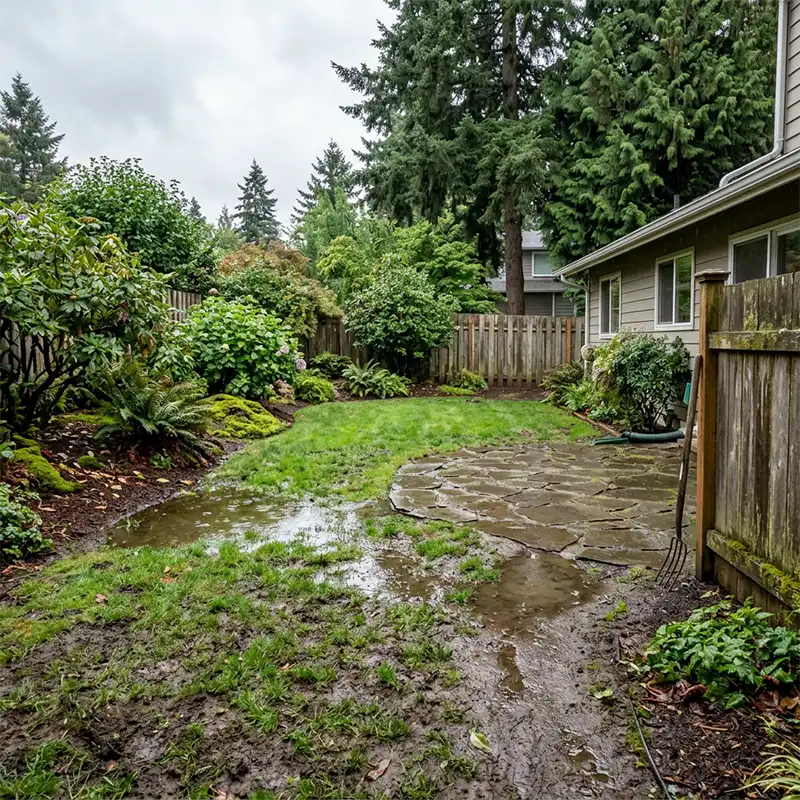
Walk your yard during or right after a heavy rain. That’s when Portland yards show you exactly what’s going wrong.
Look for standing water. Puddles in the lawn, soggy ground near planting beds, runoff crossing a patio, wet soil against the foundation. Each one tells you something different. Puddles in the lawn usually mean a low spot that needs regrading or a catch basin. Water against the foundation means the grade is sloping the wrong direction. Runoff crossing hardscape means the surface drainage isn’t routed properly.
Look at the slope. Does the ground fall away from the house, or toward it? Even a subtle grade toward the foundation creates problems over a seven-month rainy season. Check the transitions between the lawn and any patios, walkways, or planting beds. Water should always have a clear path away from structures.
Look for areas that never dry out. If the same spots stay soggy for days after every storm, surface regrading alone won’t fix it. That’s water trapped in Portland’s clay soil with nowhere to go. A French drain or E-Z Flow system collects that water underground and moves it to a discharge point.
Look at your soil. Grab a handful after rain. If it’s dense, sticky, and holds its shape when you squeeze it, you’re on clay. Most Portland metro properties are. Clay absorbs water slowly and holds it for a long time, which is why drainage systems here need to intercept water and move it through gravel and pipe rather than relying on the soil to absorb it.
Look at what’s directing the water. Patios, walkways, retaining walls, raised beds, and even compacted lawn paths all change where runoff goes. Sometimes the drainage problem isn’t too much water. It’s that existing features are sending the water to the wrong place. A downspout dumping against the foundation, a patio graded toward the house, or a retaining wall without drainage behind it can each create problems that look like they’re about the rain but are really about the routing.
The areas that stay wet the longest and frustrate you the most are where the project should start. Identify those first and the rest of the plan follows.
When you schedule a free consultation with Monaghan’s, we walk the property during or after rain when possible to see exactly how water moves across your yard. You’ll receive a written estimate specifying drain type, pipe size and material, trench depth, gravel specification, discharge location, and any grading corrections, with line-item pricing, before any work begins.
Common Goals for Drainage and Grading Projects
Prevent Water Damage
One of the most common reasons homeowners look into drainage or grading improvements is to keep water from collecting where it can cause damage. Redirecting runoff away from the house, patios, walkways, and landscape beds helps protect both the yard and the structures around it.
In Portland, water pooling against a foundation through a seven-month rainy season can cause cracks, settling, and moisture intrusion that costs $5,000 to $20,000+ to repair. A drainage fix that prevents it is a fraction of that cost.
Make the Yard More Usable
Soggy areas and standing water can make parts of a yard difficult to enjoy, especially during Portland’s rainy months. Drainage and grading improvements help create drier, more stable ground so lawns, planting areas, and outdoor spaces are easier to use throughout the year.
Properties in Milwaukie, Gladstone, and inner Southeast Portland often have flat yards on clay soil that stay soggy well into May. Regrading and French drains can turn a mud pit into a usable lawn in one project.
Reduce Erosion Problems
When water moves across a yard the wrong way, it can slowly wash soil downhill and leave parts of the landscape uneven or unstable. Good grading and drainage planning help control runoff, reduce erosion, and support healthier long term landscaping.
Hillside properties in West Linn, Lake Oswego, and Damascus lose soil every rainy season when runoff isn’t controlled. Each year the erosion gets worse, and the fix gets more expensive.
Common Yard Situations Where Drainage and Grading Improvements Help
💧 Standing Water After Rain
If water tends to sit in parts of your yard after a storm, that usually means the area doesn’t have enough slope or drainage to move the water away. Low spots in the lawn can stay muddy for days and make the space harder to use. In some cases, grading alone isn’t enough to solve that kind of problem.
Catch basins and regrading may be needed to collect water below the surface and move it away from the area more effectively. Grading adjustments and drainage improvements can help water move through the yard more effectively instead of collecting where it causes problems.
🏠 Water Moving Toward the House
When the ground slopes the wrong way, water can start moving toward the foundation instead of away from it. Even a subtle grade issue can create drainage problems over time if runoff doesn’t have a clear path away from the house.
In some situations, a regrading and downspout routing can help intercept and redirect that water before it has a chance to collect near the foundation or move into the wrong part of the yard. Correcting the slope and improving drainage can help protect both the yard and the areas around the home.
🌱 Soggy Lawn Areas
Some yards never seem to fully dry out, especially during Portland’s rainy season. You may notice soft ground, thinning grass, or patches that stay wet long after the rest of the yard has dried. In many cases, the issue comes from poor drainage, compacted soil, or a grading pattern that traps water in one part of the lawn.
When that keeps happening, solutions may include regrading the area, improving soil drainage, or installing a French drain or E-Z Flow to help move excess water away from the saturated part of the yard.
⛰️ Erosion on Sloped Ground
On properties with slopes or uneven terrain, rainwater can slowly wash soil downhill and leave parts of the landscape unstable. Mulch may shift, planting beds can lose shape, and bare areas may start to appear where runoff keeps cutting through the yard.
Retaining walls, terracing, and drainage swales help control water flow and reduce the long term effects of erosion.
Drainage and Grading Project Examples
Drainage and grading improvements can solve several different yard problems. Here are a few common ways Portland homeowners use these projects to protect and improve their outdoor space.
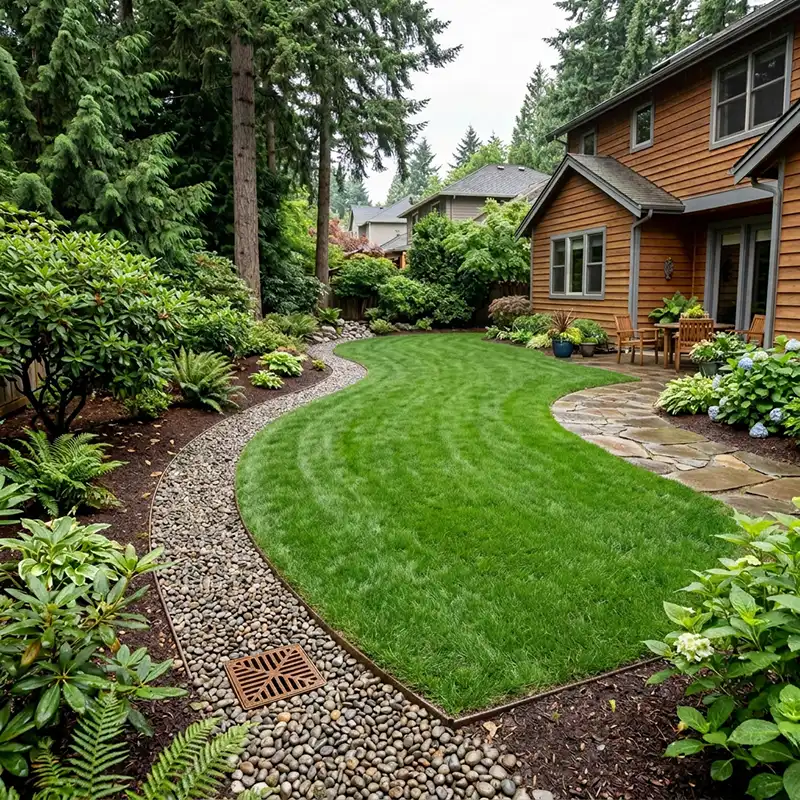
French Drain for Wet Lawn Areas
Water kept collecting in one part of the yard after heavy rain, leaving the lawn muddy and difficult to use.
Solution: A French drain was installed to collect and redirect excess water underground so the area could dry out more evenly and stay more usable during Portland’s rainy season.
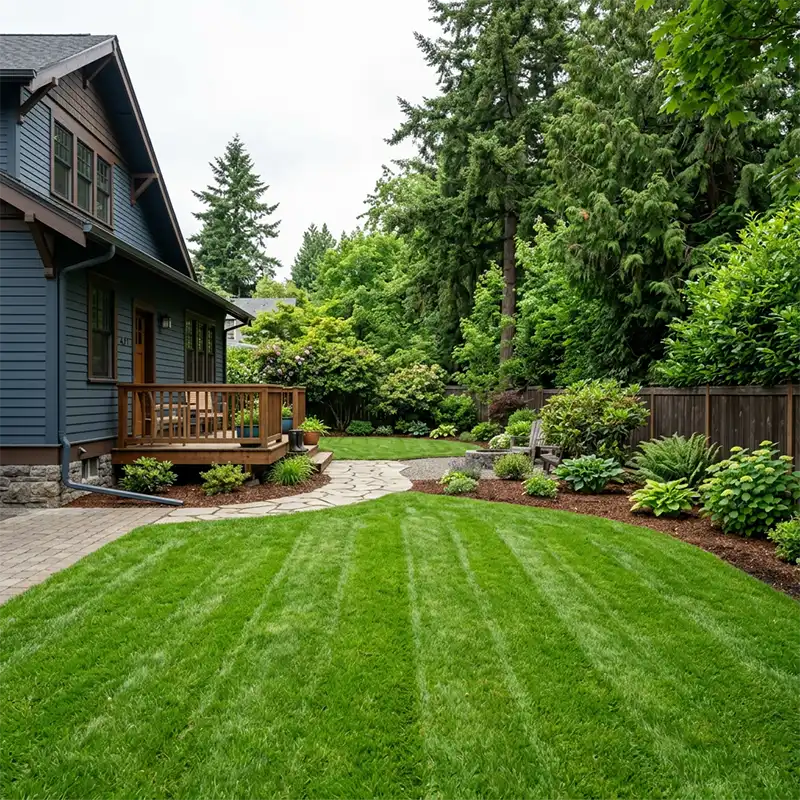
Lawn Grading Repair
A section of the lawn had low spots that stayed soggy and soft long after the rest of the yard had dried out.
Solution: Regrading the area corrected the slope, improved surface drainage, and made the lawn more stable and usable throughout the year.
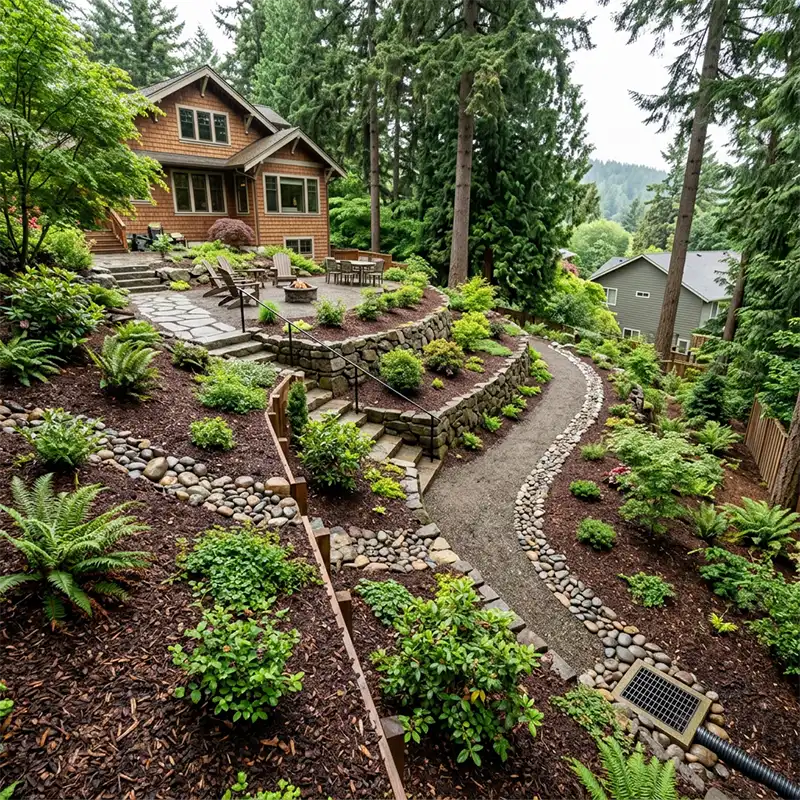
Slope Drainage & Erosion Control
Runoff was washing soil downhill and creating erosion problems along a sloped part of the property.
Solution: Grading improvements and drainage planning helped control water flow, reduce erosion, and protect the slope from further washout.
How Big Is the Project You’re Thinking About?
Drainage and grading projects can vary quite a bit in size. Some are focused on fixing one wet area in the yard, while others involve reshaping how water moves across the entire property.
Thinking about the scope of the problem can help you understand which types of improvements may make the most sense for your yard.
Before getting too deep into specific solutions, it helps to step back and ask yourself a few simple questions about what’s happening on the property:
- Where water tends to collect or stay wet
- Whether runoff is causing erosion or moving toward the house
- Whether the issue affects one area or the overall yard layout
Use the drainage and grading project guide on the right (or below this on a phone) to help you think through the type of project you may be planning.
Smaller Drainage Projects
- French Drains
- Catch Basins
- Minor Regrading
Medium Yard Drainage Projects
- Lawn Grading Repair
- Drainage Swales
- Runoff Control Around Patios
Larger Drainage Improvements
- Full Yard Regrading
- Slope Drainage and Erosion Control
- Drainage Planning for Multiple Problem Areas
Important Questions To Consider
Q: How do I know if my yard has a drainage problem or a grading problem?
They often go together, but there’s a simple way to tell. If water pools on the surface and flows the wrong direction, that’s a grading problem. The ground isn’t sloped correctly to move water away from structures and toward a proper outlet. If the surface looks fine but the ground stays soggy for days after rain, that’s a drainage problem. Water is trapped in the soil with no way out.
Most Portland yards have some of both because clay soil compounds whatever the grading is already doing wrong. The fix usually addresses both at the same time.
Q: Can I fix drainage problems without tearing up my whole yard?
In many cases, yes. A single French drain or catch basin targeting the worst problem area can make a significant difference without disturbing the rest of the property. E-Z Flow systems use a narrower trench than traditional French drains, which means less excavation in tight spaces like side yards and garden beds. Downspout rerouting is one of the least disruptive fixes and often one of the most effective.
That said, if the entire yard grades toward the house or multiple areas hold water, a more comprehensive approach is the smarter investment. We assess the full property during the consultation and recommend the smallest scope that actually solves the problem.
Q: How much does it cost to fix drainage in a Portland yard?
It depends on the scope. A single French drain typically runs $1,500 to $4,000. Catch basin systems run $800 to $3,000. Downspout rerouting is $500 to $2,500. Yard regrading ranges from $1,500 to $6,000 depending on the area. A multi-system project combining French drains, catch basins, grading, and downspout routing typically runs $4,000 to $15,000.
Larger properties with hillside erosion or full-yard drainage redesign can reach $10,000 to $25,000+. The biggest cost variables are soil conditions, slope, access, and how many problem areas need to be addressed. For full pricing detail, see our drainage solutions cost breakdown.
Q: Will drainage work damage my existing lawn or landscaping?
Trenching for French drains and pipe runs does disturb the surface along the trench line. We restore trenched areas with backfill, compaction, and sod or seed as part of every project. Most residential drainage trenches are 6 to 12 inches wide, so the disruption is a narrow strip, not the whole yard.
Catch basins require a small excavation at each inlet point. Regrading affects a wider area but the finished surface is restored with topsoil and sod. We plan trenching routes to minimize impact on existing landscaping, and any areas we disturb are returned to finished condition before we leave.
Q: When is the best time to fix drainage problems in Portland?
The best time is before the rainy season starts in October. A system installed in late summer or early fall is in place and working before the heaviest rains arrive.
That said, drainage work can be done year-round in Portland. We install systems through the wet months when needed, though saturated soil can make excavation more challenging.
If you’re seeing drainage problems right now during rainy season, don’t wait until summer. Call (503) 847-9110 or request a free consultation so we can assess the situation and get a plan in place.
Every yard handles water a little differently, especially in the Portland area where slope, soil conditions, and seasonal rain can create very different drainage patterns from one property to the next. Looking at the site in person is usually the best way to understand what kind of drainage or grading improvements will actually solve the problem.
If you’re starting to think about drainage work for your yard, our free consultation can help you evaluate the problem areas and understand what options may work best for your property.
Landscaping Services That Often Work Together With Drainage and Grading Projects
Drainage and grading improvements are often part of a larger landscaping plan. Once water is moving the right way and problem areas are under control, many homeowners start looking at other upgrades that can make the yard more usable, more attractive, and easier to maintain.
Depending on the property and the goals for the space, drainage work may naturally connect with improvements like retaining walls, patios, lawn installation, irrigation systems, or low-maintenance turf. The services below are some of the most common landscaping upgrades homeowners consider alongside drainage and grading projects.
Click on any picture to learn more.
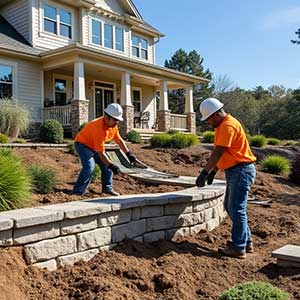
Retaining Wall Installation
A retaining wall can reshape steep or uneven ground into outdoor space that feels more stable, more usable, and easier to enjoy. Whether the goal is to support a slope, create terraced planting areas, or manage grade changes in the landscape, a professionally built wall adds both structural value and a more finished look to the property.
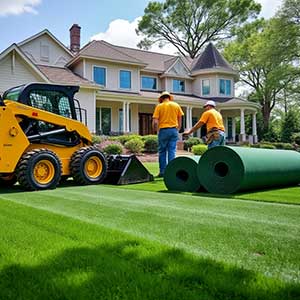
New Sod Lawn Installation
A new sod lawn can quickly give your yard a full, healthy look without the wait that comes with growing grass from seed. For homeowners who want faster results and a cleaner finished landscape, professionally installed sod creates an immediate lawn surface that improves curb appeal and makes outdoor space more enjoyable.
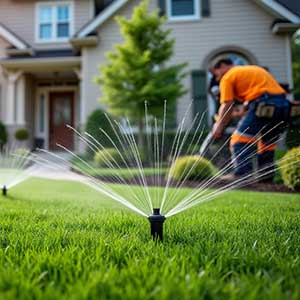
Sprinkler System Installation
An automatic sprinkler system helps lawns and planting areas stay healthier by delivering steady, efficient watering where water is needed most, and where it’s not. With professionally planned zones and strategic programmable scheduling, homeowners can support greener landscapes, spend much less time watering by hand, and use water more effectively throughout the yard.
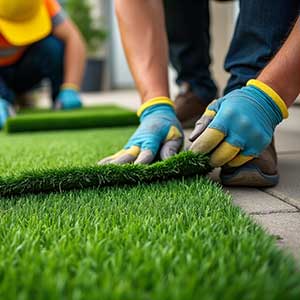
Artificial Turf Installation
Artificial turf offers a neat, consistently green lawn without the mowing, watering, or regular upkeep that comes with natural grass. Today’s synthetic turf systems create a durable, mud-free surface that stays attractive through rain, pets, and everyday use, making them a smart low-maintenance option for many smart Portland area homeowners.
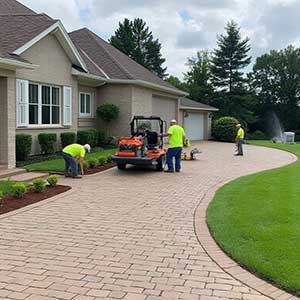
Paver Installation
Paver patios, walkways, and driveways can bring both durability and custom style to outdoor spaces when they’re installed with the right foundation and attention to detail. With the planned appropriate base preparation, professionally built paver surfaces stay even, hold up well over time, and give the landscape a clean, finished look that adds lasting curb appeal.
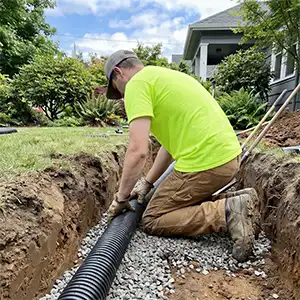
Drainage Solutions
You’ve done the research. Now let us do the work. We install French drains, E-Z Flow systems, catch basins, grading corrections, drainage swales, and erosion control solutions designed for Portland’s clay soil and seasonal rainfall. Every project starts with a free on-site assessment.
Beyond our five core services, we handle a full range of residential and commercial landscaping projects across the Portland metro area.
Every project, from a simple mulch installation to a full outdoor kitchen build, gets the same treatment: a written proposal with line-item pricing and a defined scope before work starts.
Helpful Drainage and Grading Guides
If you’re still exploring solutions for your yard, these drainage and grading guides can help you understand common problems and possible solutions.
Click on any guide below to view it.
Drainage for Pavers
Learn how drainage and grading affect paver projects in Portland and why water control matters before patios, walkways, or other hardscape work begins.
Read Now ▸
Fix a Sloped Yard
See how landscaping improvements can make a sloped backyard easier to use while helping manage runoff, erosion, and uneven ground.
Read Now ▸
Retaining Wall Drainage
Proper drainage behind a retaining wall is critical for long term performance. This guide explains how water pressure is managed and why it matters.
Read Now ▸
Comparing Drainage Systems
Learn how French drains, catch basins, and E-Z Flow systems compare and which one fits your Portland property’s soil, slope, and water conditions.
Read Now ▸
Spotting Drainage Problems
Five warning signs that your yard has a drainage issue, what causes each one, and what to do before the damage gets worse.
Read Now ▸
French Drain Pricing
What a French drain actually costs in the Portland area, how project size and site conditions affect the price, and how to get an accurate estimate.
Read Now ▸
Wall Permits Portland
If drainage issues are tied to slope stabilization or structural wall work, this guide explains when retaining wall permits may come into play in Portland.
Read Now ▸
Paver Surface Protection
Water movement and construction planning both affect hardscape performance. This guide explains how existing landscaping can be protected during paver work.
Read Now ▸
Seasonal Planting Timing
Portland weather plays a big role in when landscape work and planting projects perform best. This guide helps with timing and planning around seasonal conditions.
Read Now ▸
Looking for related help?
Explore our other planning guides:
Landscape Planning Guide • Retaining Wall Planning Guide
Explore Landscaping Solutions
Many yard challenges are connected. Once drainage issues are under control and water is moving the right way, homeowners often start exploring other improvements that can make the space more comfortable, more usable, and easier to maintain. The guides below explore several landscaping solutions that often work well alongside drainage and grading projects.
Click on any guide below to view it.
Retaining Wall Ideas
When drainage problems are tied to slope or erosion, retaining walls can help stabilize the yard and create more usable outdoor space.
Read Now ▸
Best Wall Materials
Different retaining wall materials offer different benefits for drainage, durability, and appearance. This guide helps compare the most common options.
Read Now ▸
Paver Design Ideas
Once drainage and grading are corrected, patios and walkways often become the next step in making the yard feel more finished and usable.
Read Now ▸
Best Lawn Options
Wet, patchy lawn areas often lead homeowners to consider sod or artificial turf after drainage issues have been addressed.
Read Now ▸
Artificial Turf Guide
Artificial turf can be a smart low-maintenance option for areas where natural grass struggles because of drainage, shade, pets, or heavy use.
Read Now ▸
Irrigation System Basics
Good drainage and efficient irrigation work together. This guide explains how sprinkler systems help support healthier lawns and landscape beds.
Read Now ▸
What Should a Drainage Estimate Include?
A proper drainage estimate should specify the drain type for each component (French drain, E-Z Flow, catch basin, grading), pipe size and material, trench depth and total run length, gravel type and volume, filter fabric specification, catch basin count and placement, discharge point location, any grading corrections with finished elevation targets, and warranty terms.
If an estimate you’ve received for drainage work is a single number without specifying pipe size, trench depth, or where the water actually exits the system, you have no way to evaluate whether the design will solve your problem or create a new one.
Drainage failures in Portland are almost always design failures, and the design should be in your hands before the first trench is cut.
Ready To Talk About Your Project?
Or Fill Out The Form Below
⬇
Submit this form
We call within one business day
You get a detailed estimate with line-item pricing, material specs, and a 3-year warranty
Most consultations are booked within a few days of your request.
Areas We Serve
Drainage and grading issues show up in many different kinds of properties across the Portland metro area, from gently sloped suburban yards to hillside lots with more serious runoff concerns. Monaghan’s Landscaping works with homeowners throughout the region to improve water flow, protect landscaping, and make outdoor spaces more usable year-round.
If you’re dealing with standing water, soggy lawn areas, runoff, or erosion in one of the communities listed below, our team can help you evaluate the problem and explore practical solutions for your yard.
Don't see your area? Give us a call, we probably serve your area too! Call (503) 847-9110